
Ad. Some links here are affiliate links. If you book through them I earn a small commission at no extra cost to you.
Table of Contents
ToggleSharjah in a nutshell: Sharjah is the third-largest of the UAE’s seven emirates and sits right next to Dubai. It’s the best place in the country to see traditional Emirati culture: restored souks, heritage houses, desert archaeology, mangroves and mountain villages, without Dubai’s crowds. Sharjah is alcohol-free and more conservative than Dubai. It stretches from the Arabian Gulf to the Gulf of Oman, so in one trip you can do city souks, a desert safari and a sea-view retreat. Plan 7 days, hire a car or a driver, and go between November and March.
When I told friends I was spending a week in Sharjah, most of them said the same thing: “Where’s that? Near Dubai?” Yes, it’s right next door. But after a week exploring its souks, deserts, mountains and coastline, I can tell you it feels like a completely different country.
Sharjah was the most authentic glimpse of Emirati culture I’ve had in the UAE. In this guide I’m sharing everything I learned: what to see, where to eat, where to sleep, how to get around and the mistakes to avoid.
Sharjah at a Glance
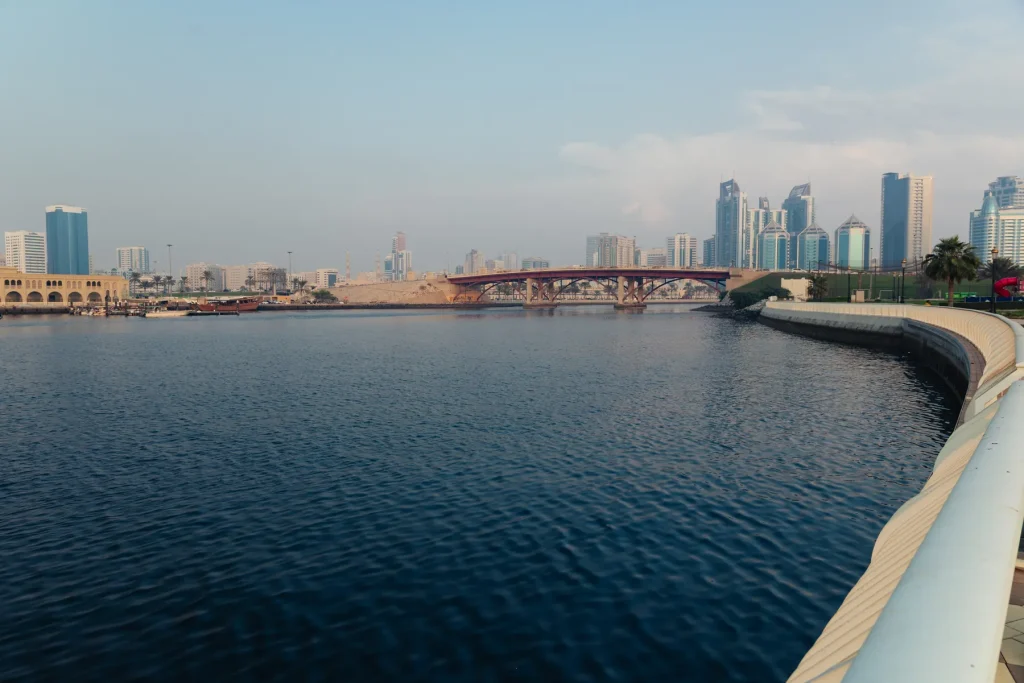
Sharjah is one of the seven emirates of the United Arab Emirates, and UNESCO named it the Cultural Capital of the Arab World back in 1998. Its land isn’t all in one piece. The main city sits on the Arabian Gulf, bordering Dubai. The emirate stretches inland to the desert around Mleiha, and it also owns three enclaves on the east coast: Khorfakkan, Kalba and Dibba Al Hisn, on the Gulf of Oman.
| Quick facts | |
|---|---|
| Main airport | Sharjah International Airport (SHJ), about 10–13 km from the city centre |
| Nearest big hub | Dubai International Airport (DXB), roughly 12–17 km from Sharjah city |
| Currency | UAE dirham (AED). £1 is roughly 4.8–5 AED |
| Plug type | Type G, the same as the UK, so no adapter needed |
| Alcohol | Not sold or served anywhere in the emirate |
| Ideal trip length | 7 days to cover the city, the desert and the east coast |
| Best time to visit | November to March |
Getting to Sharjah
Getting to Sharjah is very easy. You have two options:
- Fly into Sharjah International Airport (SHJ). It’s a hub for Air Arabia and is only a 20–30 minute taxi ride from the Heart of Sharjah.
- Fly into Dubai International Airport (DXB). Most long-haul flights from the UK land here. DXB is actually closer to Sharjah city than to many parts of Dubai. Expect 25–45 minutes by car depending on traffic, because the Dubai–Sharjah road gets very busy at rush hour.
My tip: book a flight that lands in the morning. That way you can check in, have lunch and spend your first afternoon unwinding at the hotel pool or spa instead of wasting a day.
Why Visit Sharjah?
If Dubai is the UAE of glass towers and brunches, Sharjah is the UAE of heritage, art and wild nature. Here’s why I think it deserves a place on your list:
- Authentic Emirati culture. Sharjah has restored its old town instead of bulldozing it. The Heart of Sharjah project brought back souks, merchant houses and the old fort, and you can still sit down for traditional coffee and dates with locals.
- Four landscapes in one emirate. In a single week I walked through 200-year-old souks, went dune bashing in red sand, swam in the Gulf of Oman and slept in a restored mountain village.
- World-class heritage. The Faya Palaeolandscape around Mleiha was added to the UNESCO World Heritage List in 2025. It holds evidence of human presence in the desert going back more than 200,000 years.
- Unique places to stay. Sharjah has some of the most special hotels I’ve ever slept in: a domed glamping retreat in the desert, a seven-room stone village in the mountains and a tented eco-retreat in the mangroves that you can only reach by boat.
- Calmer and better value than Dubai. There are fewer crowds and a slower pace, and many of the cultural sites are free or very cheap to visit.
- Easy to combine with Dubai. It’s so close that you can do both in one trip.
How to Get Around Sharjah
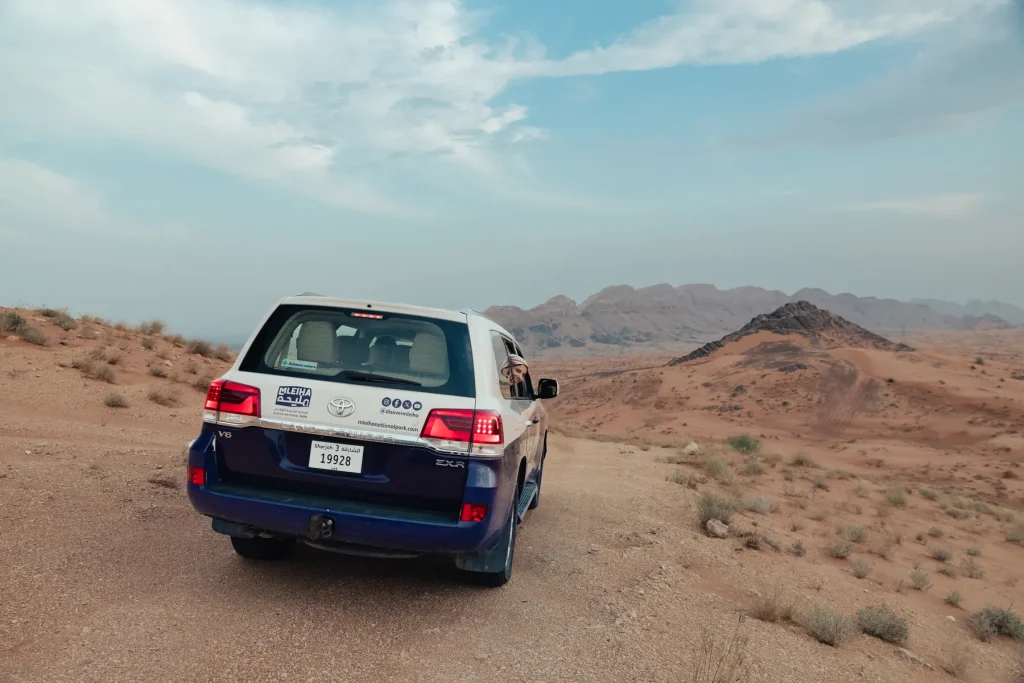
This is the most important practical advice in this guide: hire a car or hire a private driver for your whole stay.
Why you need your own transport
Taxis, Uber and Careem are easy to find in Sharjah city. Once you head east towards Kalba, Khorfakkan and the areas near the Oman border, though, ride-hailing becomes very unreliable, and getting back from a remote retreat can turn into a real headache. Many of the best experiences (Mleiha, the Hanging Gardens, Najd Al Meqsar, the Kingfisher Retreat) are spread out, with an hour or more of driving between them.
Option 1: Hire a car (my pick for independent travellers)
- Freedom. You can stop at a viewpoint, linger over lunch or change your plans at the last minute because of the weather or a change of mind.
- Easy driving. Expect traffic between Dubai and Sharjah, especially at morning and evening rush hour. Once you leave the city, the roads are wide, modern and very quiet. The drive across the Hajar Mountains to Khorfakkan is stunning.
- What you need: UK licence holders can drive a rental car in the UAE on their UK licence as a visitor, but always confirm with your rental company. Remember the UAE drives on the right.
Option 2: Hire a driver
If you don’t want to drive, a private driver for the whole stay is the next best thing. You get the same flexibility without the navigation stress, and it can work out reasonably priced if you’re travelling as a couple or a group.
Approximate driving times from Sharjah city:
- Mleiha / Sharjah Safari: about 45–60 minutes
- Khorfakkan: about 1 hour 15 minutes
- Kalba: about 1 hour 15–1 hour 30 minutes
- Hanging Gardens of Kalba: about 45 minutes
My tip: build your trip around regions instead of zigzagging. Spend a few nights in the city, then the desert, then the east coast. The itinerary I followed had long drives and a lot of dead time, and planning by region fixes that.
What to See in Sharjah: Cultural Landmarks
Sharjah Mosque
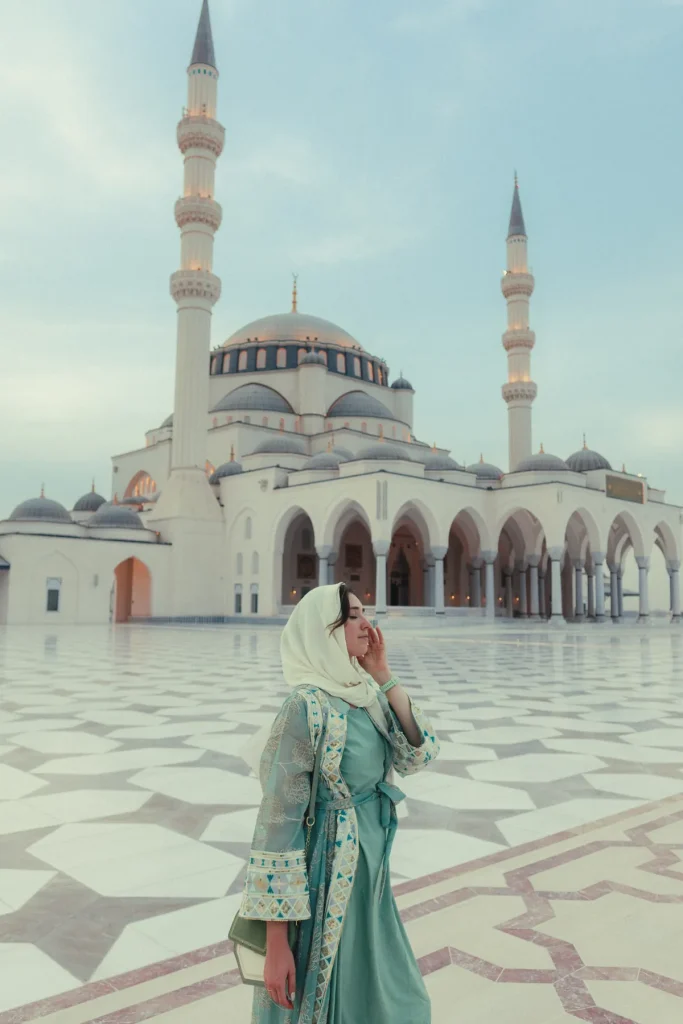
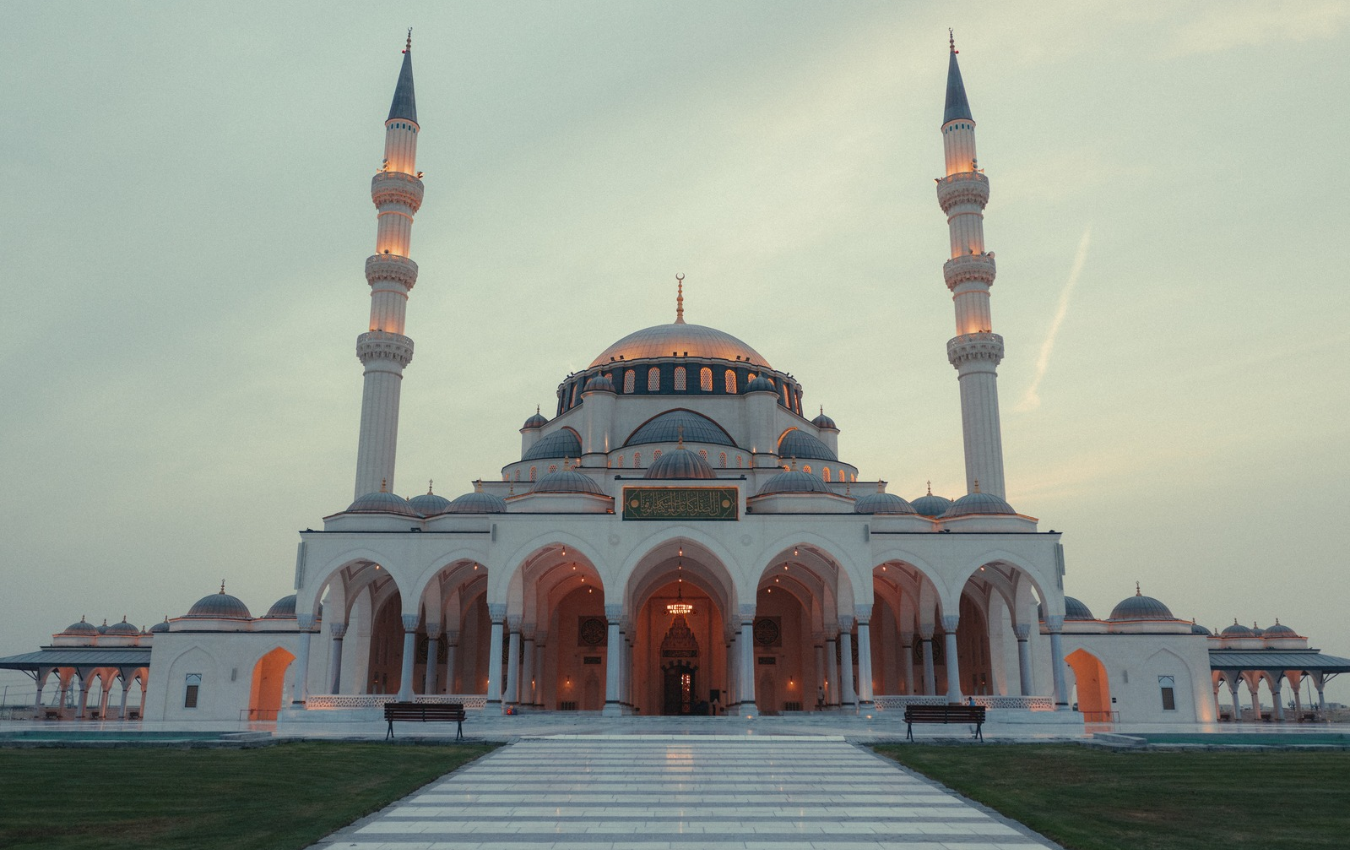
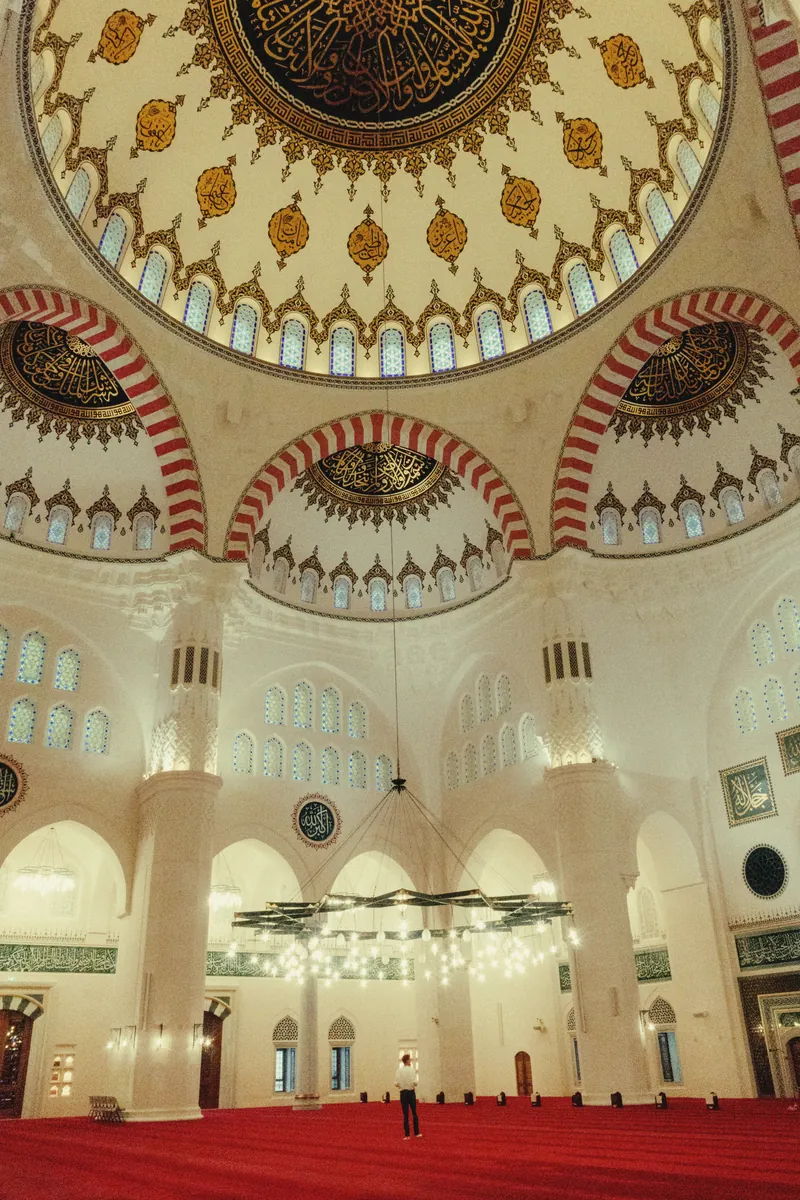
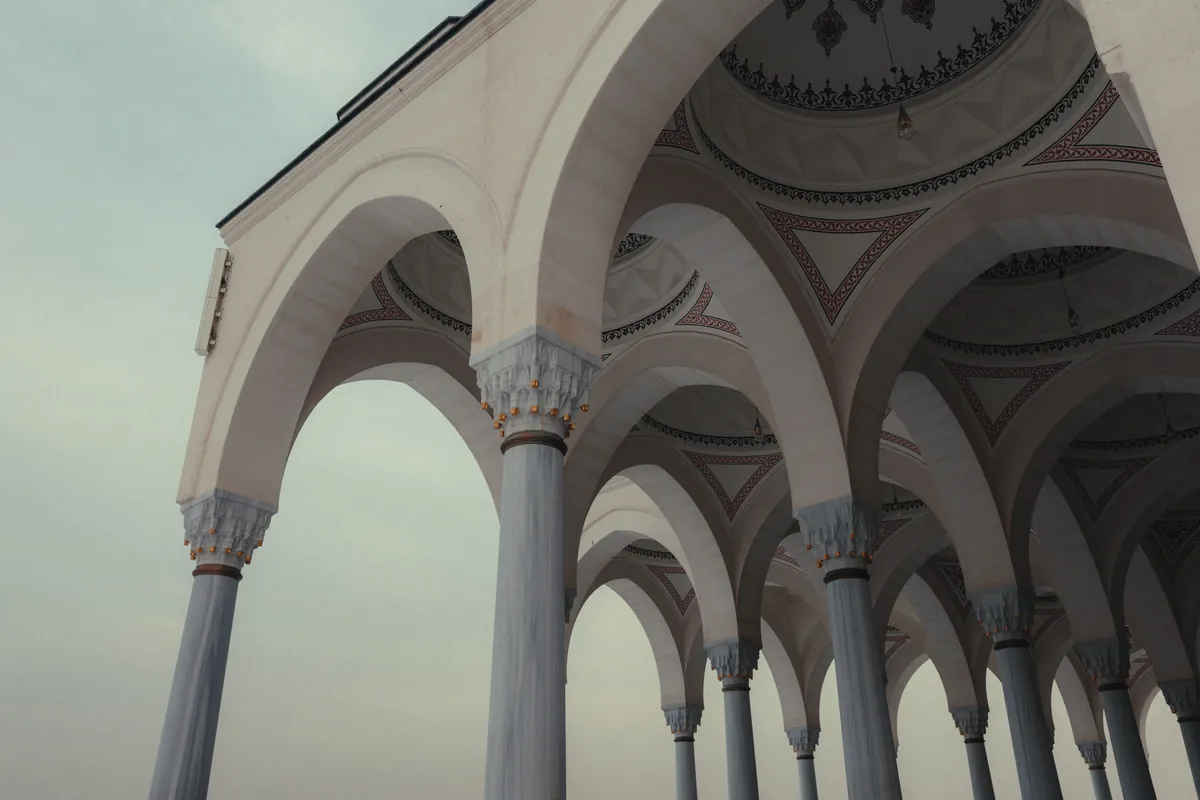
The Sharjah Mosque is the largest mosque in the emirate and can hold around 25,000 worshippers. It’s open to non-Muslim visitors, with dedicated paths, a small museum, a gift shop and a café. Go at sunset. The white domes glow gold and it’s absolutely breathtaking.
My tip: don’t hesitate to ask the security team about a ride around the grounds in their golf cart. They were so welcoming and it’s a great way to see the whole complex. Dress modestly: shoulders and knees covered, and women should bring a headscarf.
House of Wisdom
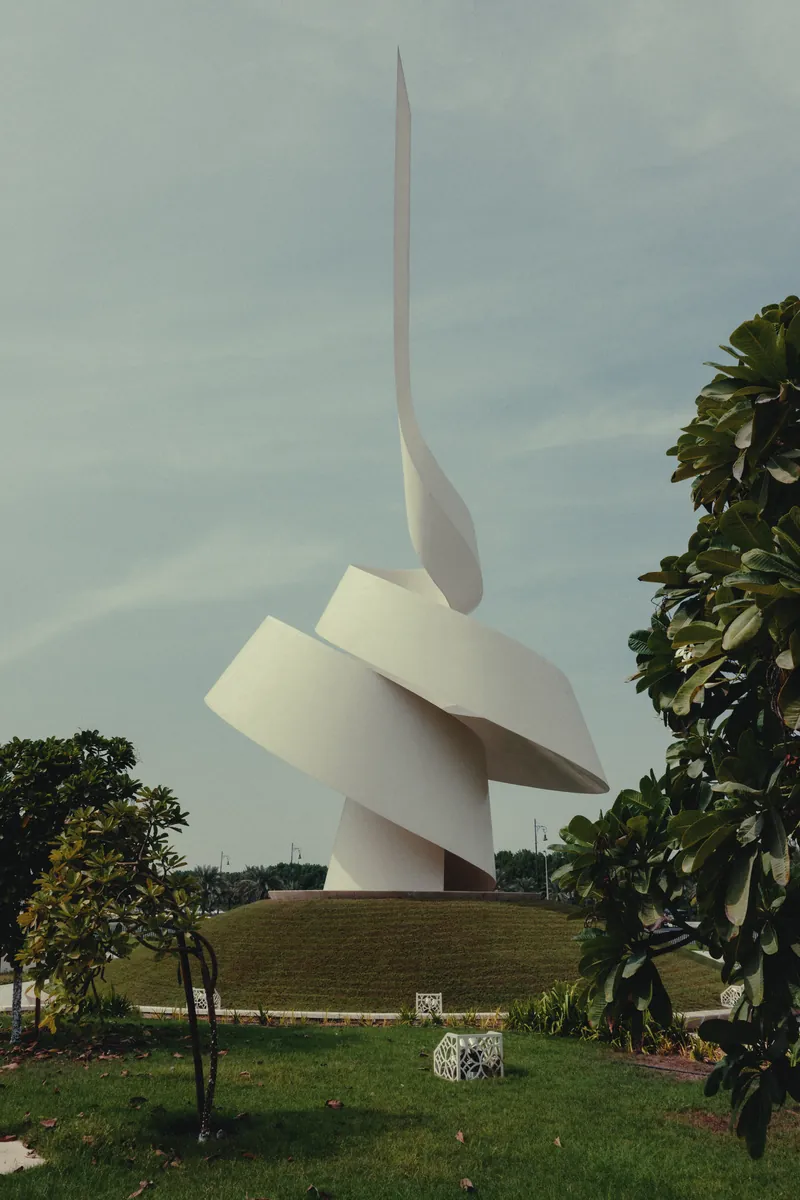
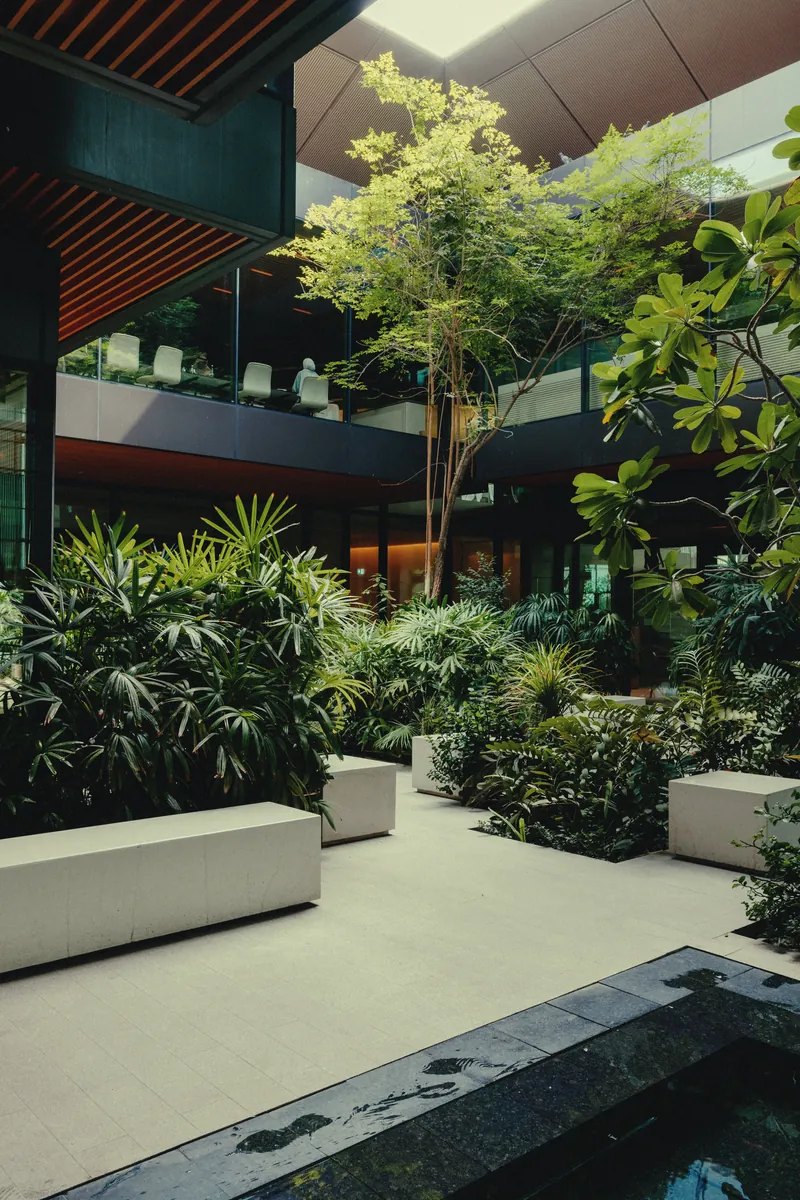
Even if you’re not a bookworm, the House of Wisdom is worth visiting just for its architecture. It’s a light-filled, ultra-modern library and cultural centre. My favourite part: you can print your own book on the spot. Its “book espresso machine” prints and binds a book in minutes, almost as fast as making a coffee. It’s such a unique souvenir.

Dr Sultan Al Qasimi Centre (دارة الدكتور سلطان القاسمي)
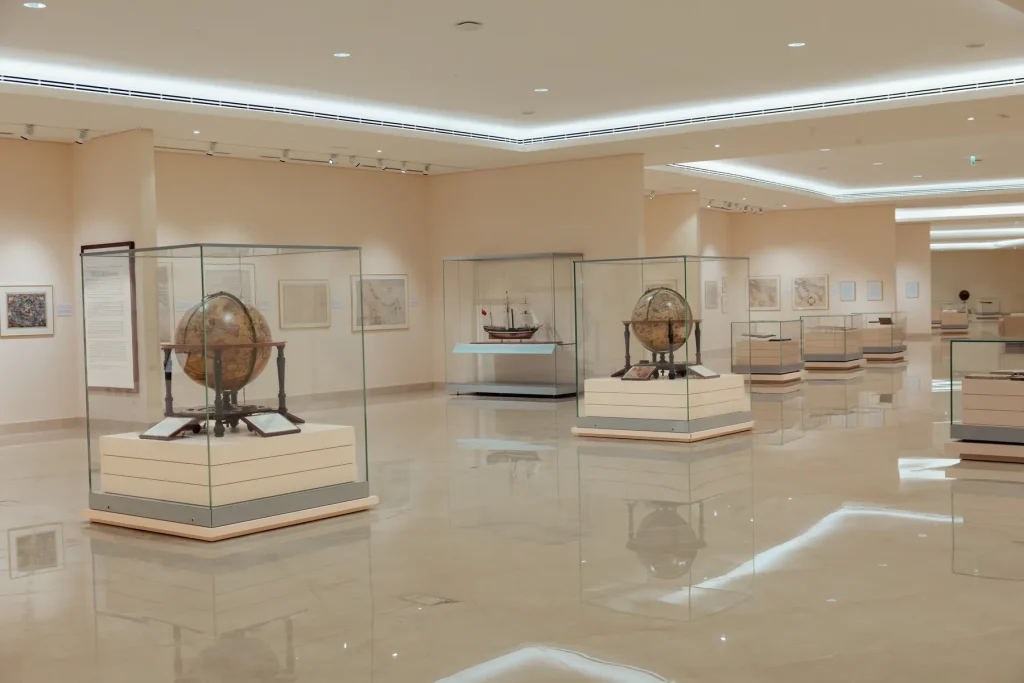
This one’s for history lovers. The centre houses the Ruler of Sharjah’s collection of centuries-old documents, early printed maps of the Gulf going back to the Renaissance, rare photographs and coins.
- Entry: free when I visited, and no booking needed
- Opening hours: Monday to Thursday, 7:30am–3:30pm (check before going, as hours can change)
- My tip: you can wander alone, but I recommend asking for a guide. It makes the visit much more interactive and full of stories you’d otherwise miss.
Kalba Mangrove Reserve
In Kalba, on the east coast, you’ll find what’s considered one of the oldest mangrove forests in Arabia. It’s a protected reserve and the last home of the Arabian collared kingfisher, which is where the nearby Kingfisher Retreat gets its name. The reserve is also an important nesting area for sea turtles and migratory birds.
- Entry: 15 AED (about £3)
- My tip: visit if you’re staying at the Kingfisher Retreat. It helps you really understand the ecosystem you’re sleeping in.
Flag Island
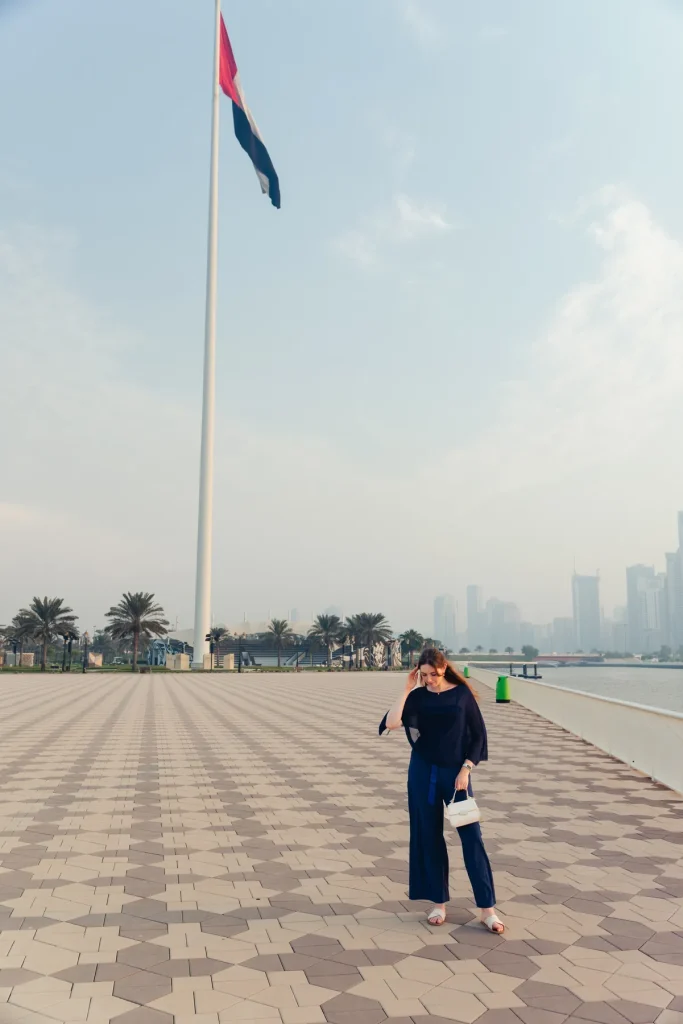
Flag Island sits on Khalid Lagoon in the heart of the city and is home to a 123-metre flagpole, one of the tallest in the world when it was raised in 2012. In 2017 it set a Guinness World Record for the largest flag ever flown on a fixed flagpole. It’s a relaxed green spot for a walk, with lovely views back over the Sharjah skyline, especially in the late afternoon.
Rain Room
This was one of the most surreal experiences of my trip: you walk through falling rain without getting wet. Sensors detect your movement and stop the rain wherever you step. The permanent installation is run by the Sharjah Art Foundation in Al Majarrah.
- Tickets: about 25 AED for adults. Book ahead at weekends.
- Sessions: about 15 minutes
- Opening hours: Saturday–Thursday 9am–9pm, Friday 4pm–10pm
The Photography Gallery
In the afternoon, when the heat is at its peak, hide indoors at The Photography Gallery (رواق التصوير الفوتوغرافي). Opened by the Sharjah Art Foundation in November 2025 in a former telecoms building in Al Manakh, it’s the UAE’s first public gallery dedicated entirely to photography. I found it really inspiring, and it’s perfect if you love photography and visual storytelling.
Adventure in Sharjah
Sharjah Safari
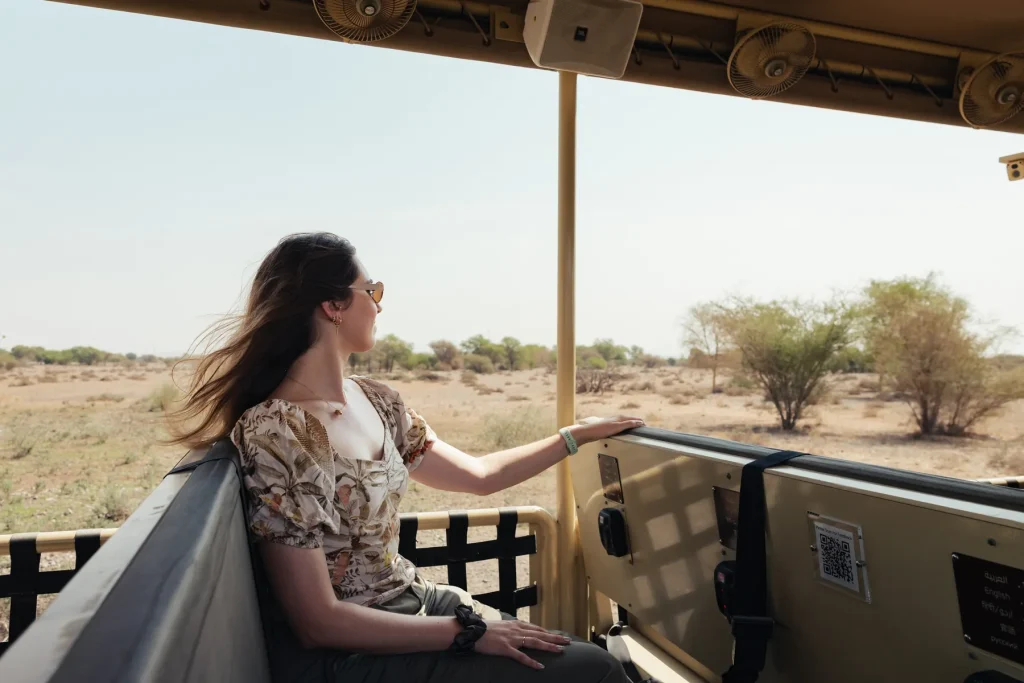
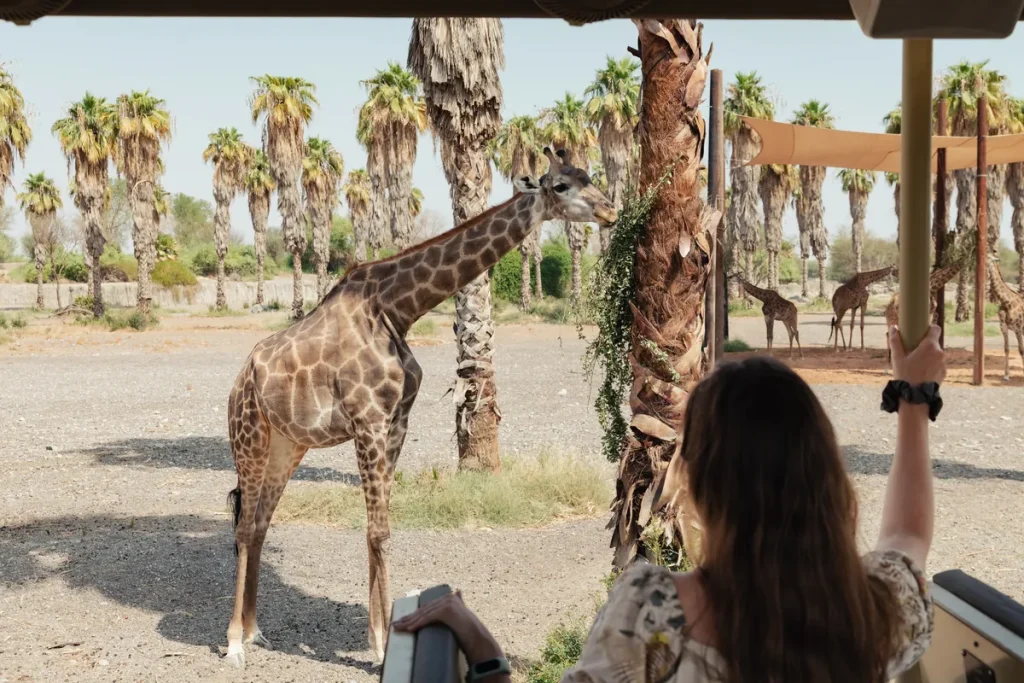
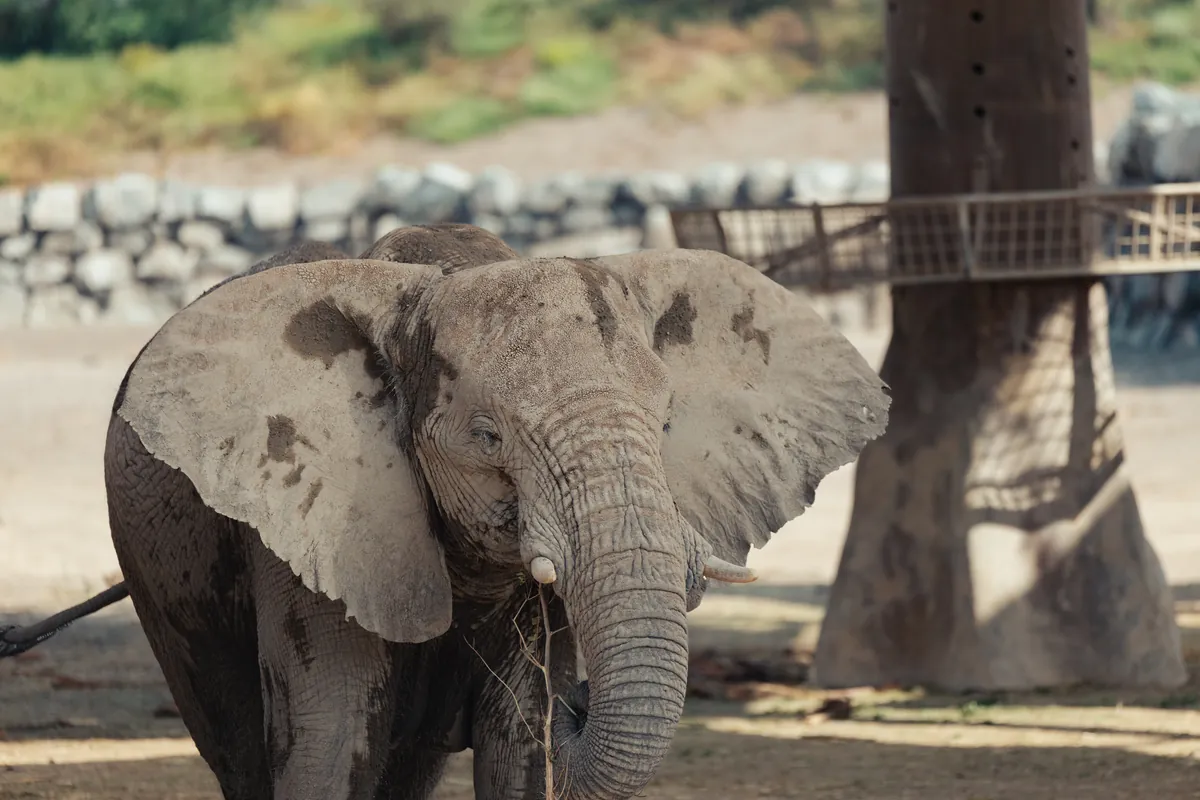
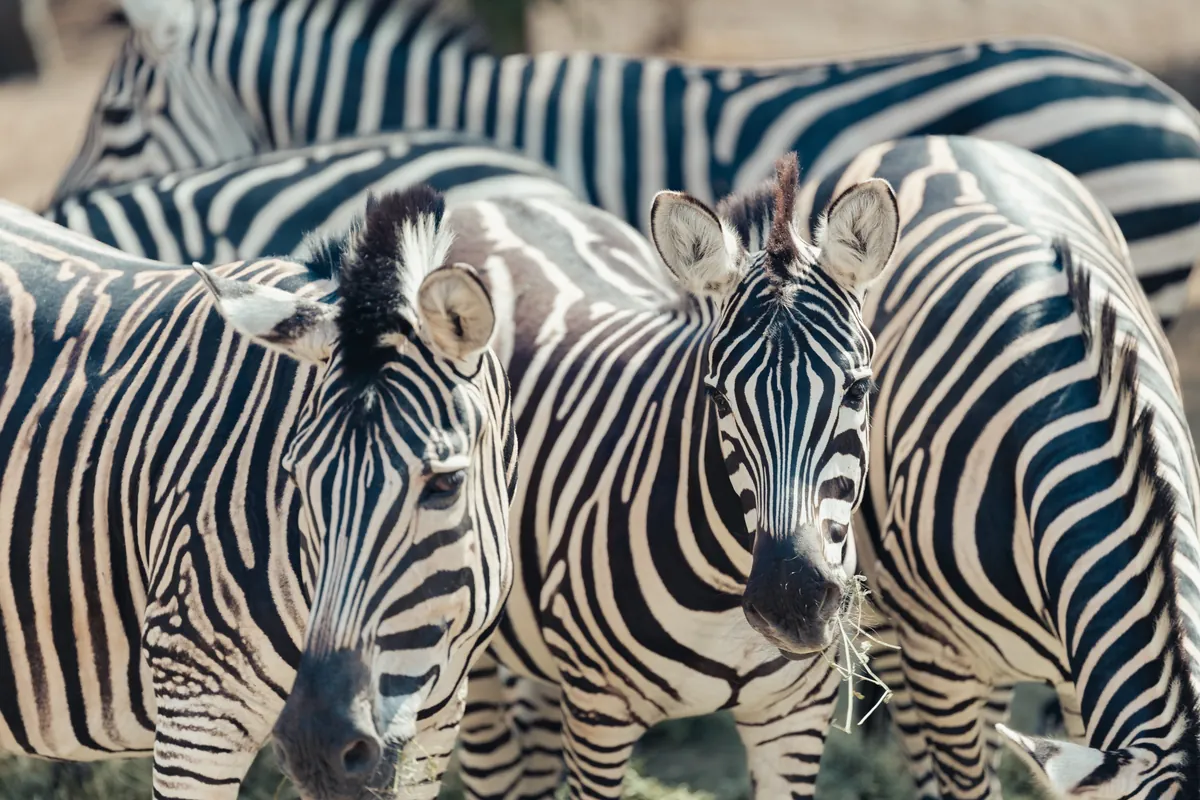
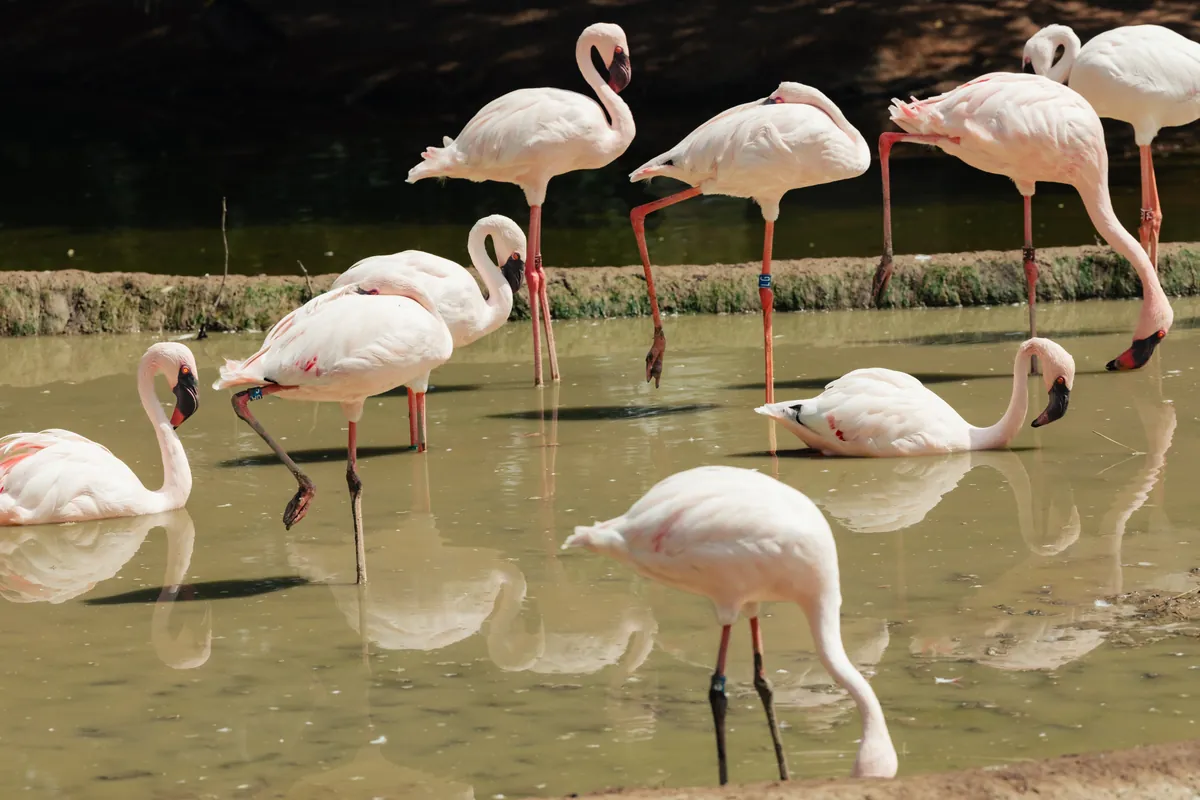
The Sharjah Safari is the largest safari park in the world outside of Africa, covering about 8 km² in the Al Bridi reserve near Al Dhaid, with more than 120 species including lions, giraffes, elephants and the critically endangered black rhino.
What I loved most was how much care goes into the animals and the habitats. It feels like a project worth supporting, not just an attraction.
- Duration: allow 2–3 hours for a guided vehicle tour
- Best time: book early morning or late afternoon, when the light is beautiful and the animals are more active. We went at 9:30am and still saw plenty.
- Tickets: there are several tiers, from a walking-only option to a private guided vehicle. Check the official website for current prices and tickets.
Mleiha: UNESCO heritage, dune bashing and dinner under the stars

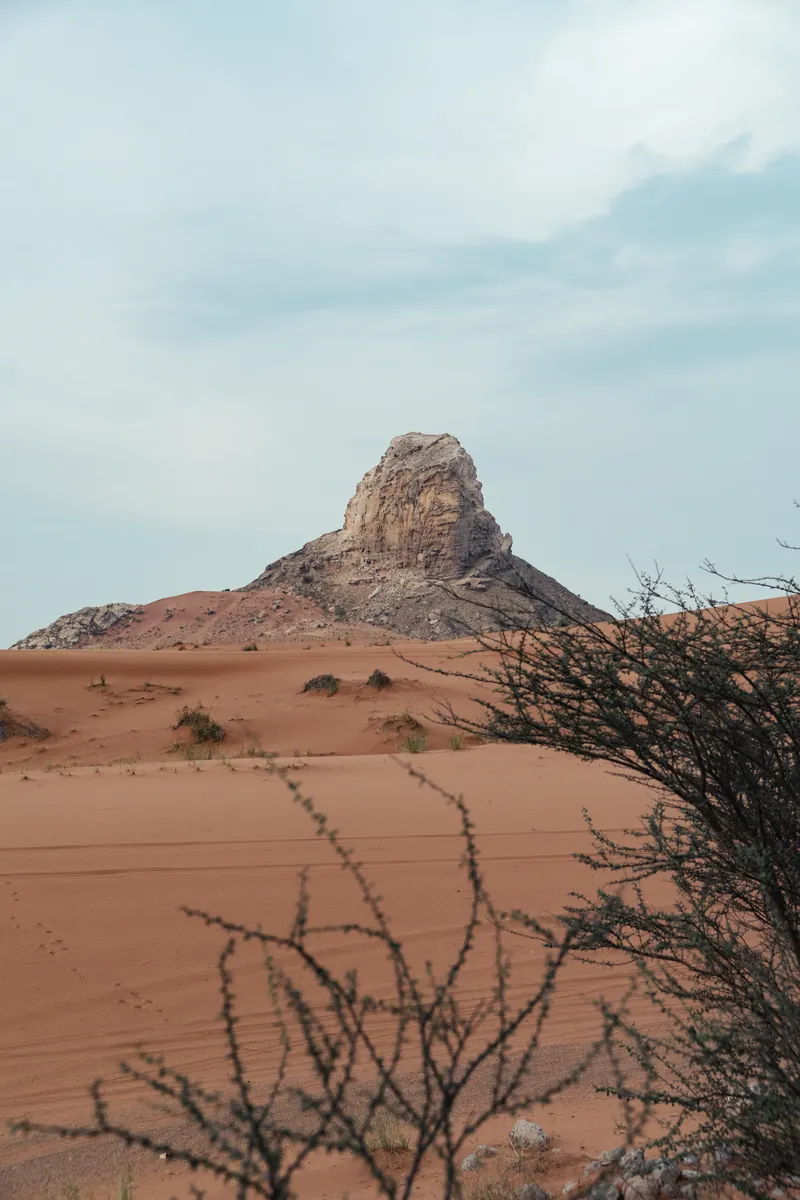
If you only book one experience in Sharjah, make it Mleiha. It was hands down the highlight of my trip.
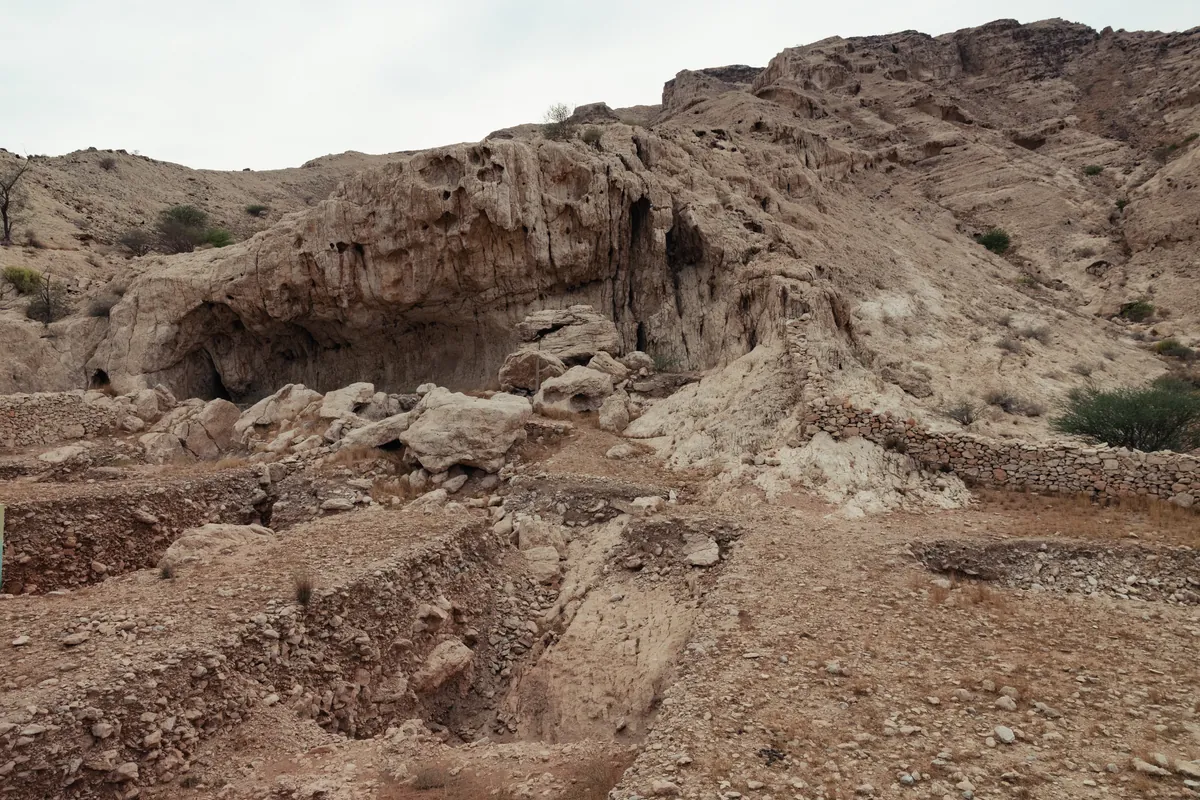
- Mleiha Archaeological Centre. This museum traces human history in the region from the Stone Age onwards. It sits at the heart of the Faya Palaeolandscape, which became a UNESCO World Heritage Site in 2025.
- Heritage sites. You visit archaeological sites in the surrounding desert with a guide.
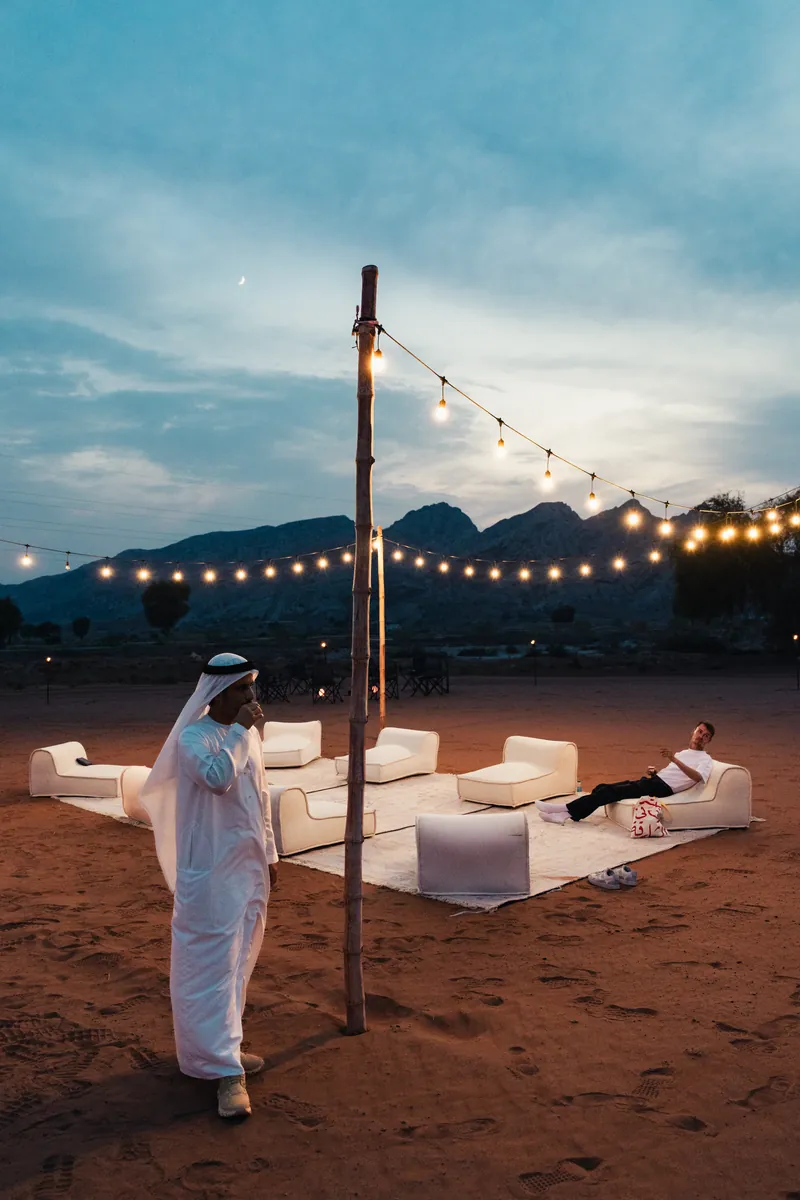
- Dune bashing at sunset. I’ve never had so much fun in my life! Hold on tight.
- Dinner and stargazing in the desert. You eat under the stars far from any light pollution, then a guide talks you through the night sky.
How to book: Book the Mleiha desert tour on GetYourGuide
Al Noor Island and the Butterfly House
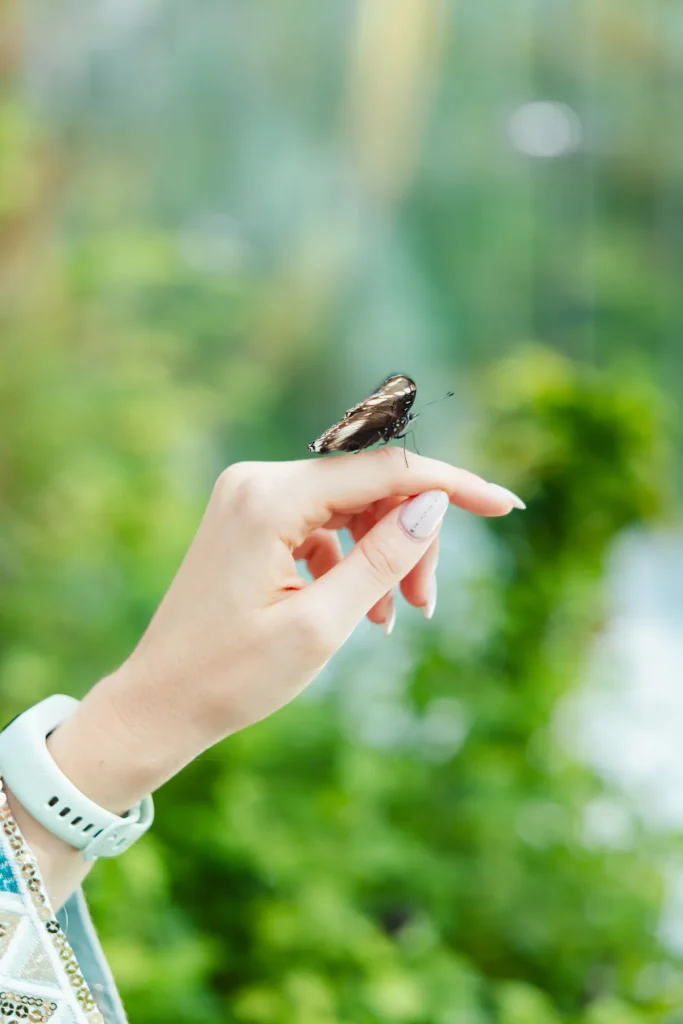
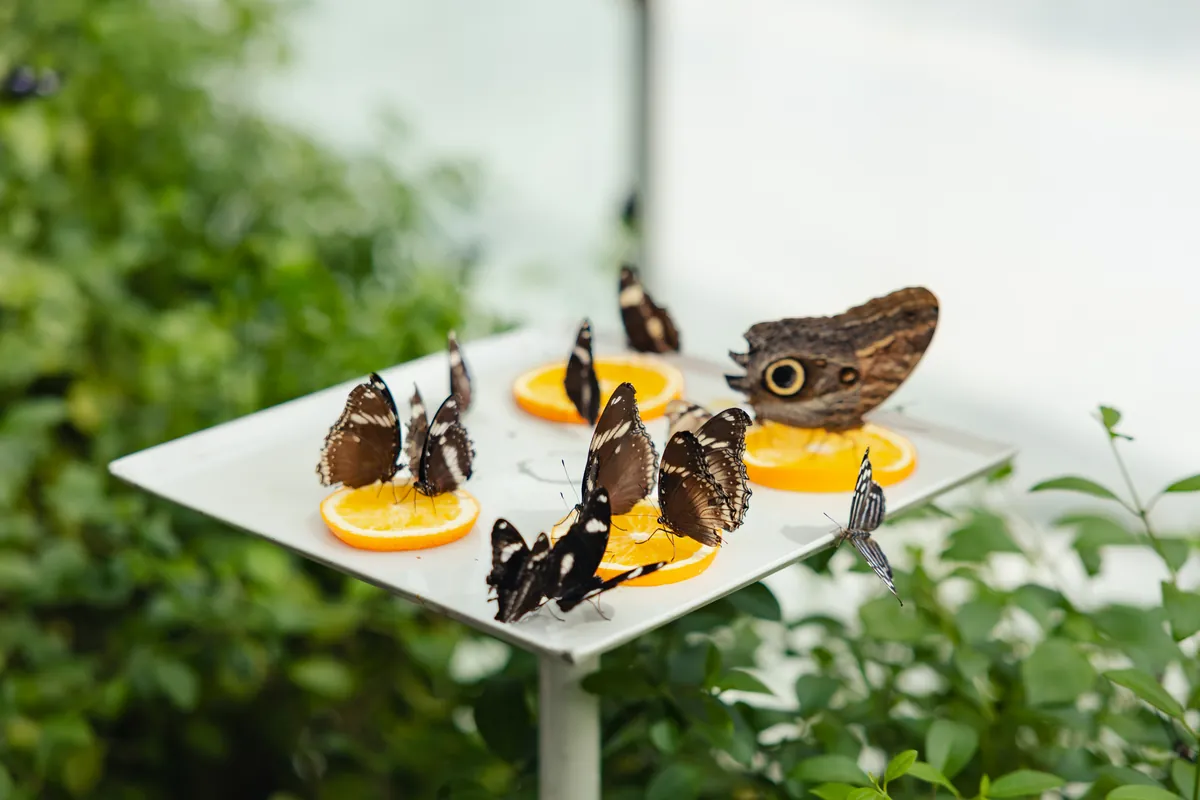
Al Noor Island is a beautifully designed art-and-nature island on Khalid Lagoon. The highlight is the Butterfly House, home to hundreds of tropical butterflies.
My tip: dab a little orange juice on your finger and the butterflies will climb right onto your hand to feed. They’re so friendly they’ll land on your clothes and even your head!
After the Butterfly House, take your time around the island. Don’t miss the giant trampoline net, and stay for sunset from the swings.
- Island hours: about 9am–11pm (later at weekends). The Butterfly House is open 9am–6pm.
- Tickets: from about 35 AED, with the Butterfly House as an add-on. Book your Al Noor Island and Butterfly House tickets

Hiking in Kalba and Khorfakkan
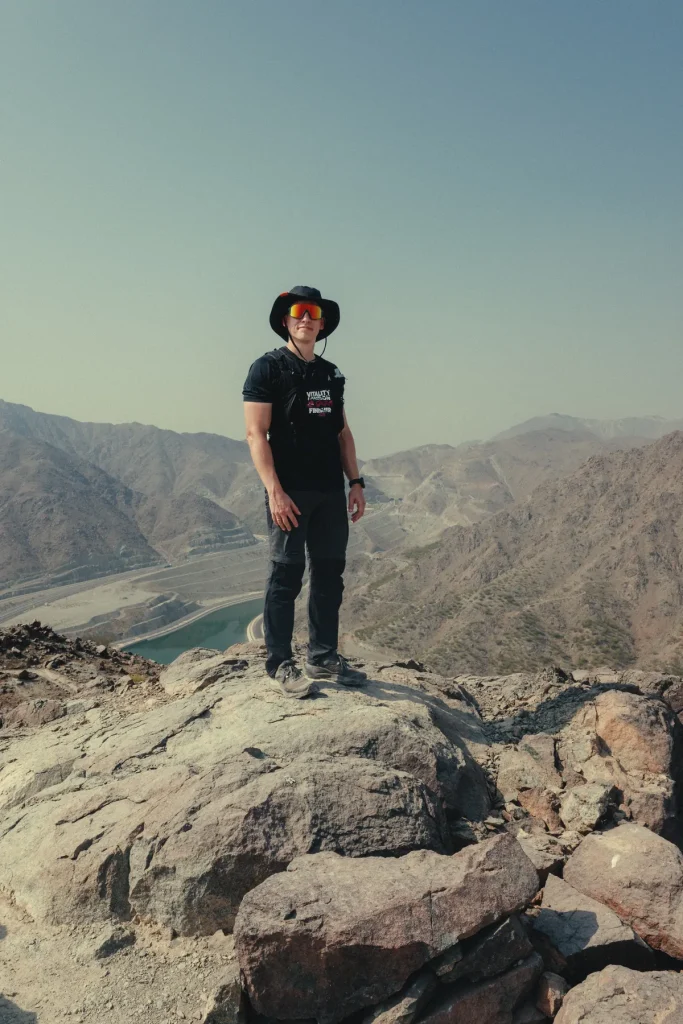
The Hajar Mountains on the east coast are a hiker’s playground, but only go early in the morning unless you’re visiting in the cooler winter months. Local outdoor company Jareb runs guided hikes as well as water activities like kayaking. If you want a self-guided hike, the Al Rabi Tower trail in Khorfakkan climbs to a 395m viewpoint over the bay.
Hanging Gardens of Kalba
Opened in 2024, the Hanging Gardens are a terraced mountainside park 281m above sea level, with more than 100,000 trees and a 55-metre waterfall that cascades into a small lake. It’s lit up beautifully at night.
Khorfakkan Waterfall and Amphitheatre
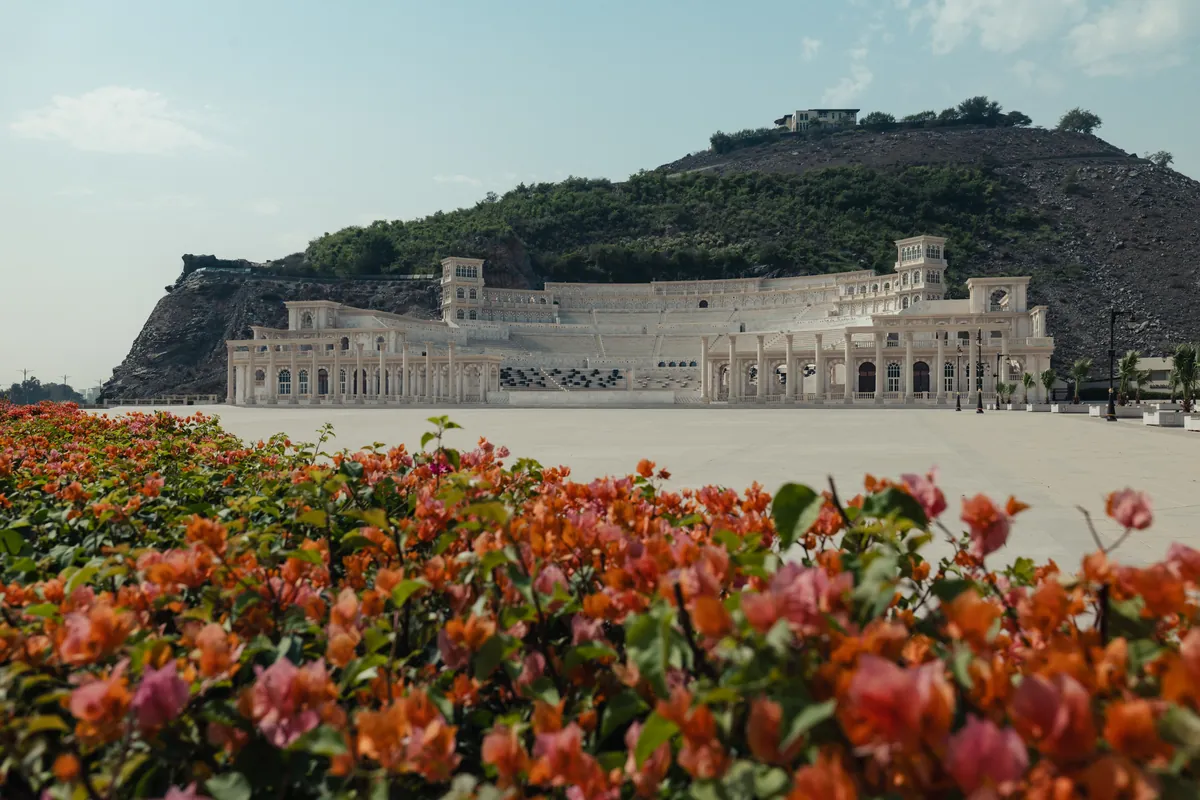
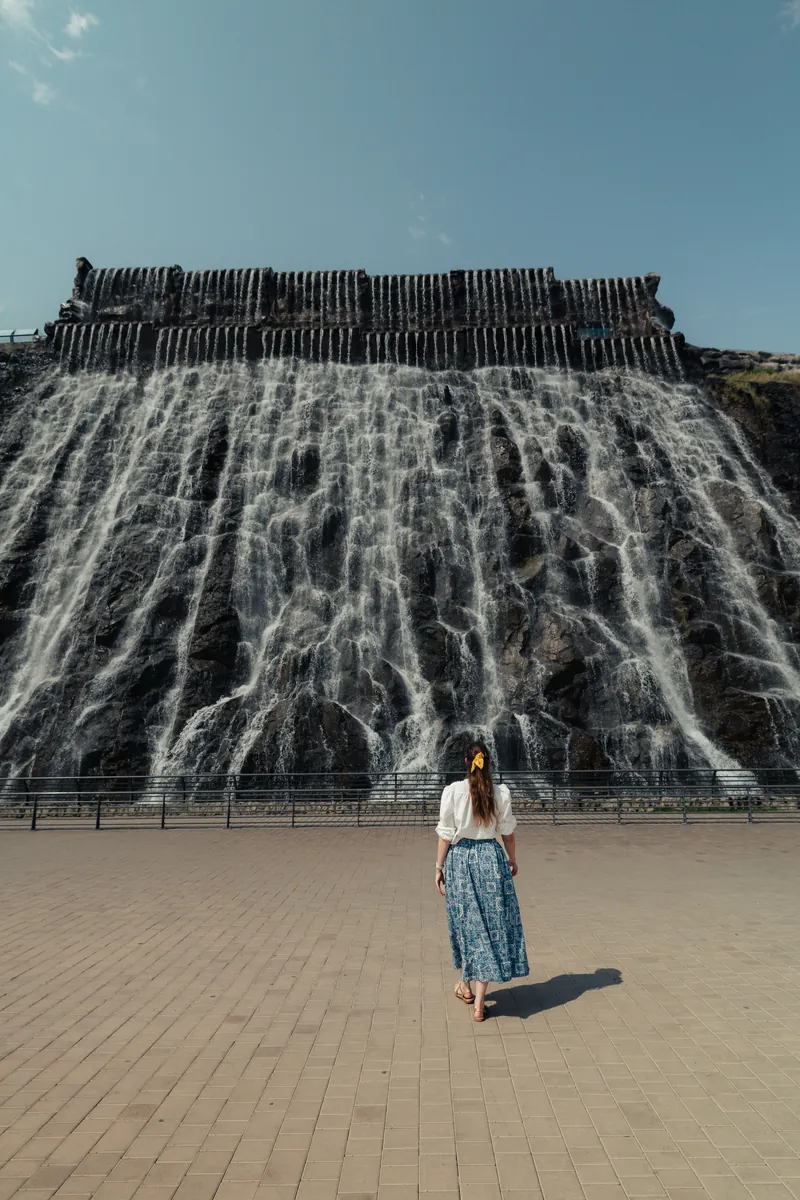
If you visit Sharjah properly, you have to head to the coast and explore Khorfakkan. The man-made Khorfakkan Waterfall cascades 45 metres down a natural cliff above the corniche. Right next to it is the Roman-inspired Khorfakkan Amphitheatre, which seats more than 3,500 people. Both are free to visit.
My tip: grab a coffee or a Lebanese bite at Habib Beirut, a restaurant built right into the waterfall with windows looking onto the cascades, then finish with a sunset walk along the corniche.
Shopping in Sharjah: Souks and the Old Town
The Heart of Sharjah is the restored historic district by the creek. It’s best explored on foot, ideally in the morning before it gets too hot. Here’s the route I’d follow:
1. Souk Al Arsah: the oldest souk
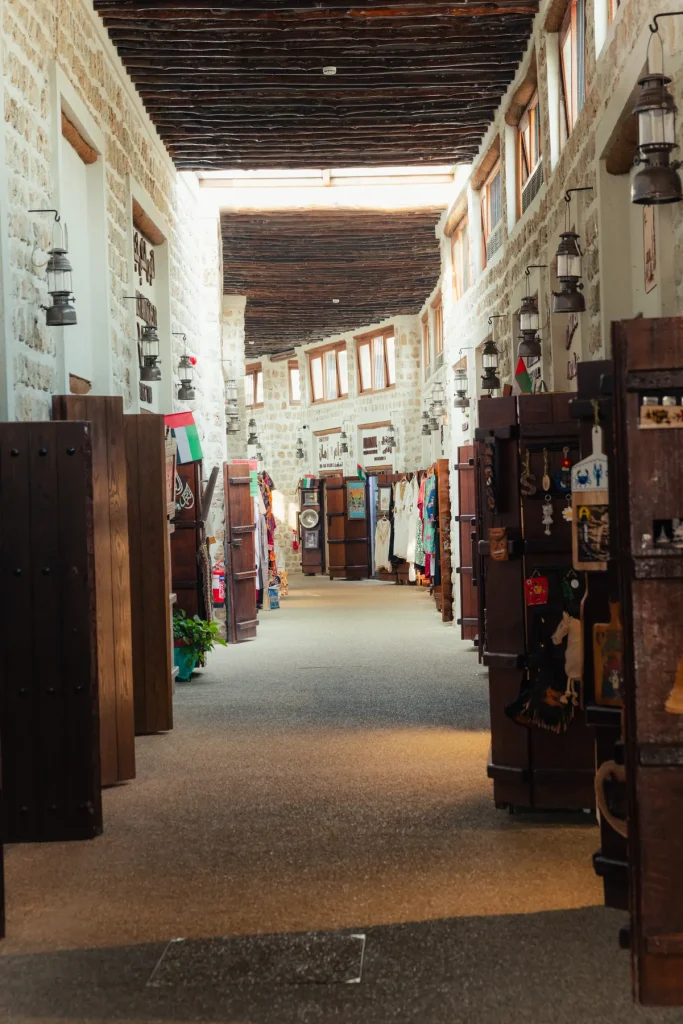
Souk Al Arsah is one of the oldest markets in the UAE, about 200 years old. Its name comes from an old word for open ground, because anyone could come and sell their goods freely.
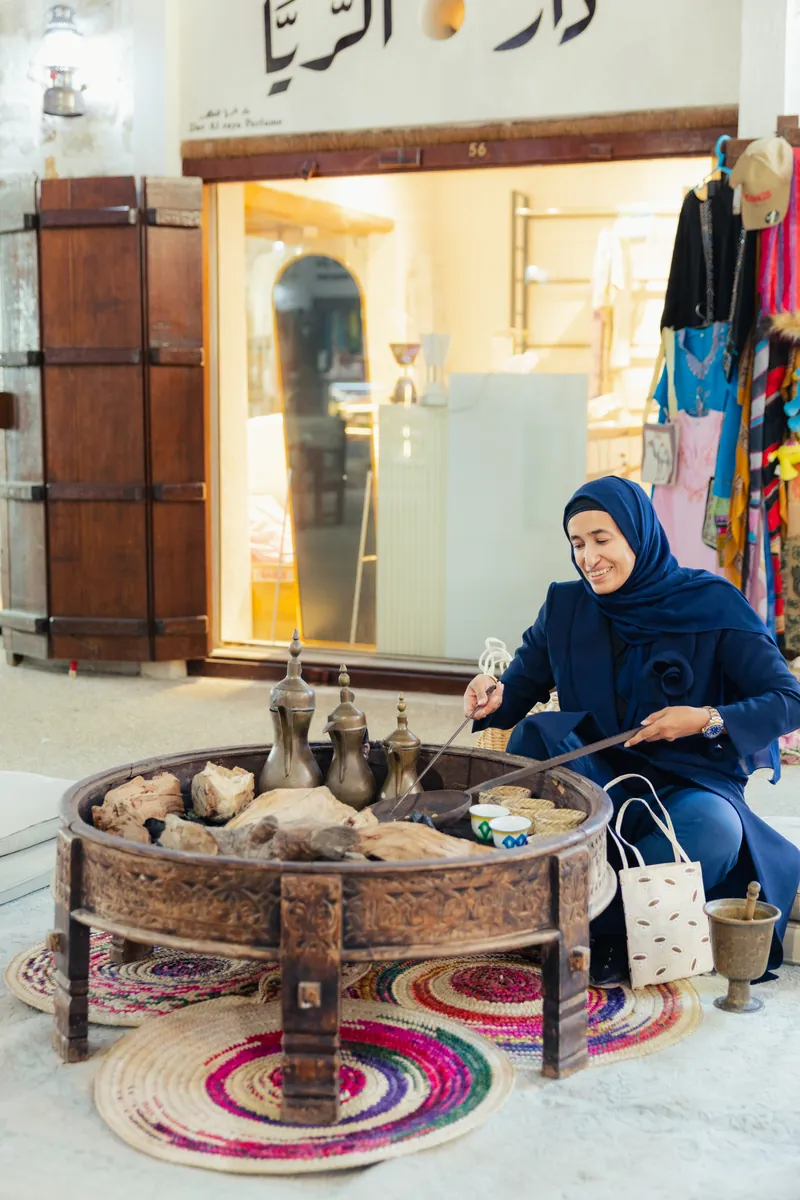
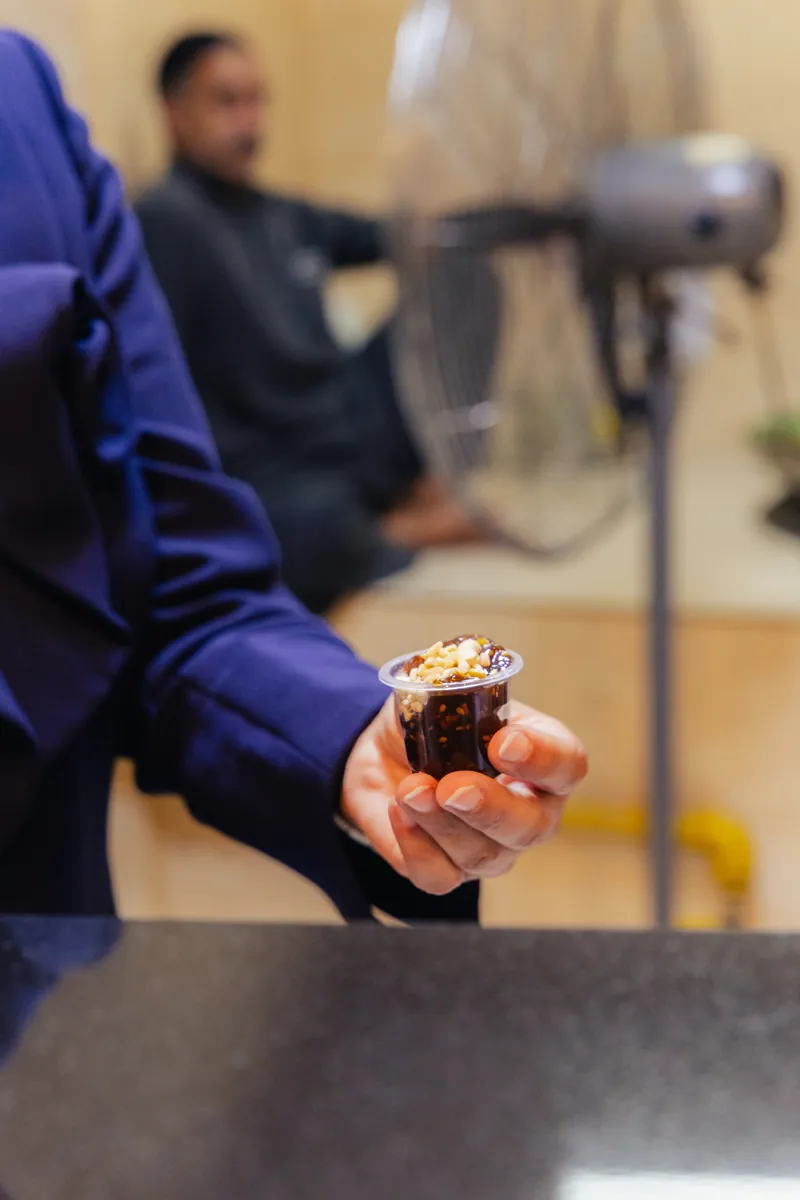
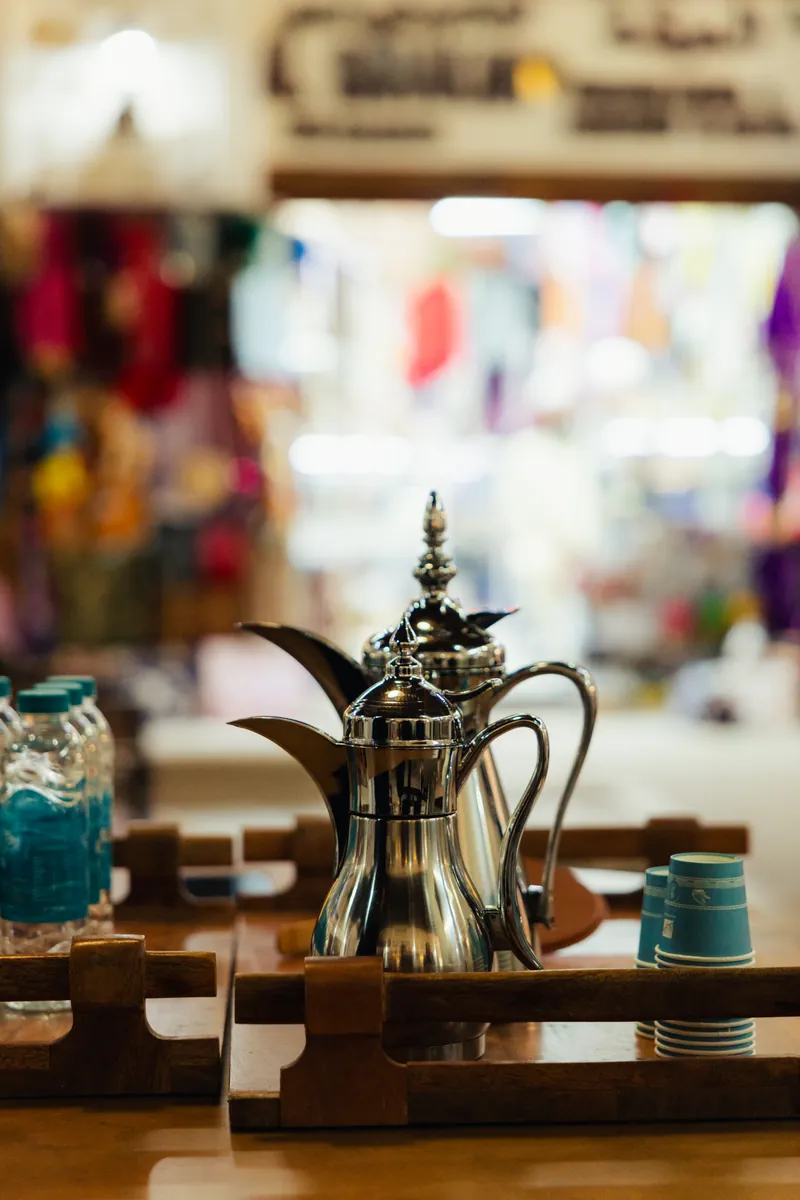
Stop at Omani Sweets Café, hidden inside the souk, to try halwa, a sticky, saffron- and rosewater-scented sweet, with a small cup of Arabic coffee.
2. Souk Al Shanasiyah
Wander through the restored alleys and independent shops, then take a break at Ratios Coffee (مقهى ريشيوز), a lovely specialty coffee shop right in the souk.
3. Souk Saqr
Keep walking to Souk Saqr for even more traditional shops, perfumes and crafts.
4. The Blue Souk (Central Souk)
The Blue Souk is the most famous building in Sharjah, with blue tiles and wind towers on the outside and hundreds of shops inside. The ground floor is full of gold and jewellery, while upstairs you’ll find carpets, antiques and souvenirs. Be ready to haggle!
5. Souq Sharq in Khorfakkan
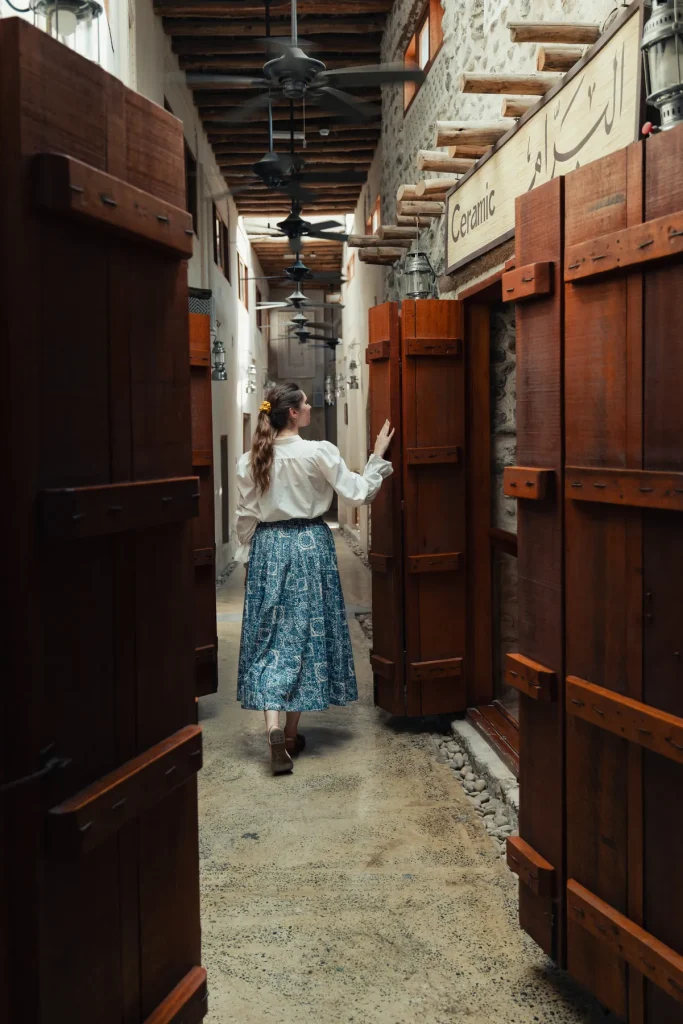
On the east coast, Khorfakkan’s restored Souq Sharq has old workshops (a jeweller, tailor, baker and a room for salting fish), plus a free museum about what life used to be like here. Behind it, you’ll find great food spots and specialty coffee.
My tip: end your city day with sunset along the Al Qasba canals. It’s the most relaxing way to finish.
Best Places to Eat in Sharjah
Murmur (Aljada): my top pick in the UAE
Murmur was incredible. Truly one of the best meals I’ve ever had. It’s Sharjah’s first homegrown Emirati fine-dining concept. The menu mixes Emirati and Gulf flavours with global techniques. Think Machboos Arancini, Wagyu Short Rib Hummus and a Karak tea San Sebastián cheesecake.
Even if you’re only going to Dubai, make the 20-minute drive to eat here. It’s an absolute must.


Bait Elowal (بيت اللوال): Heart of Sharjah
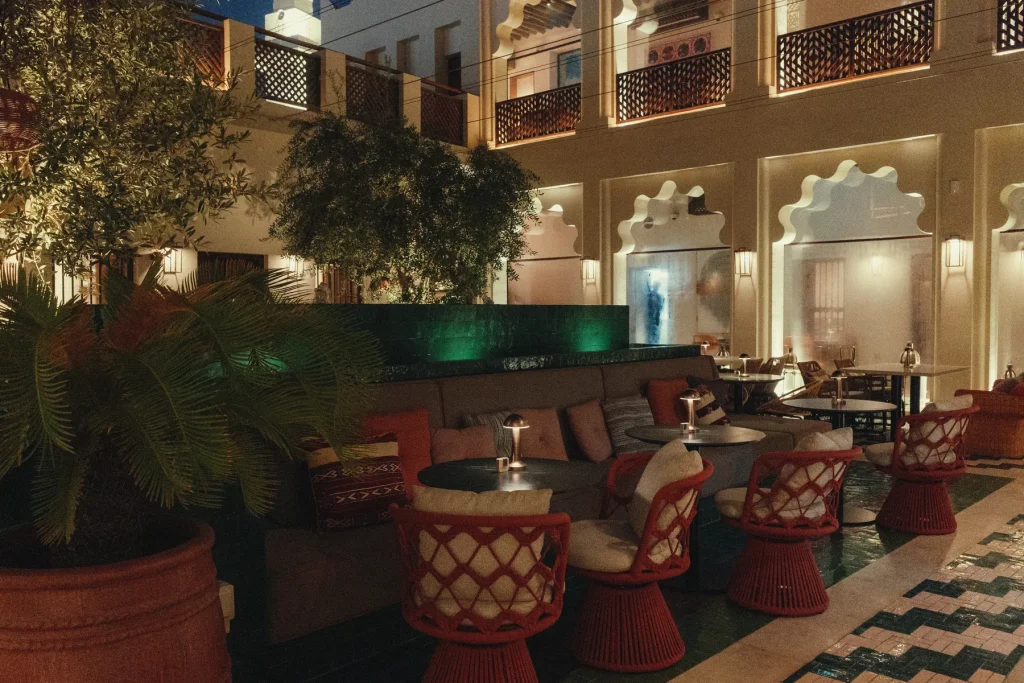
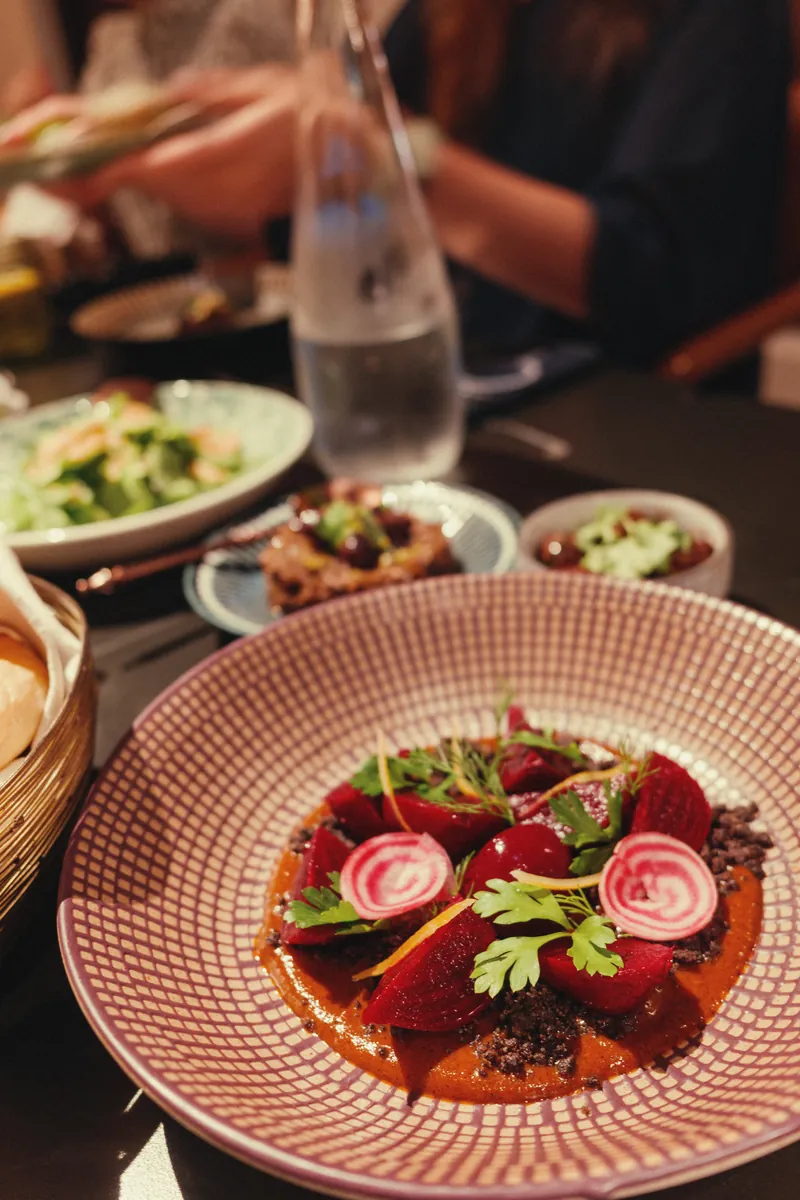
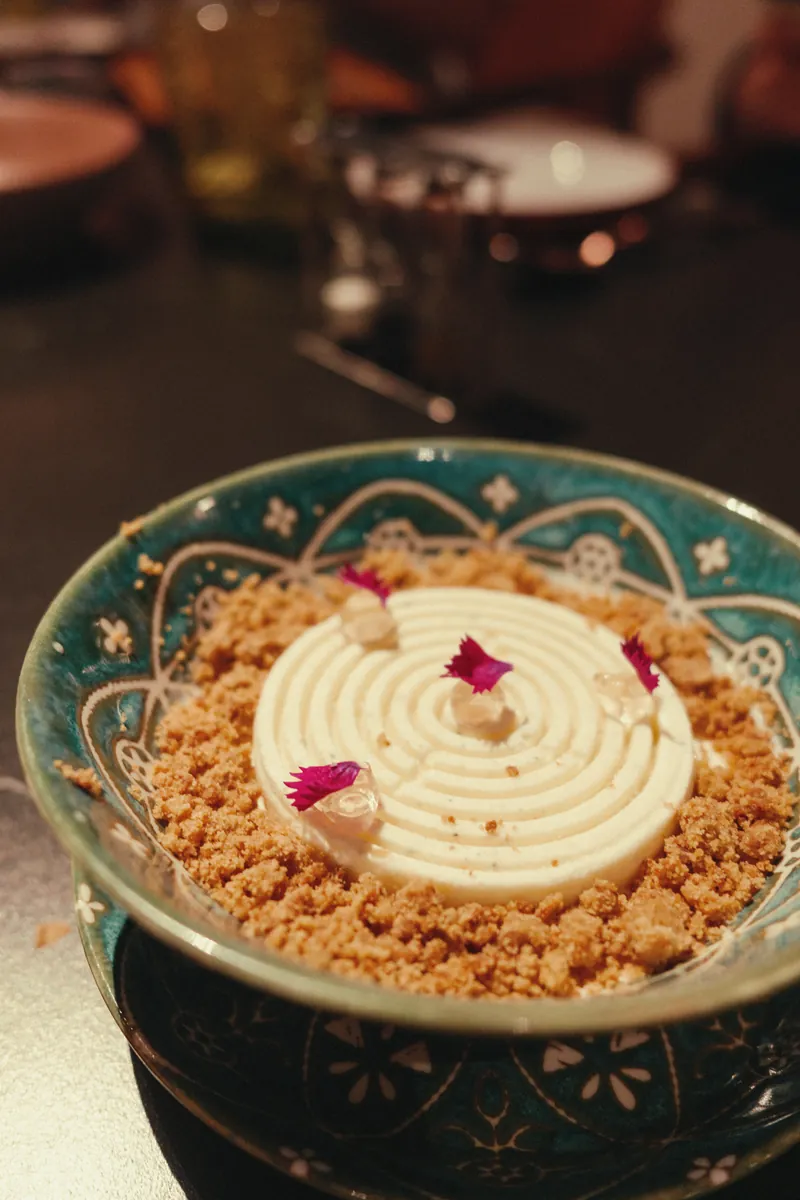
Bait Elowal is a restored heritage house over a century old, overlooking Sharjah Creek. It opened in 2025 and is decorated with so much taste: think Moroccan riad, with a courtyard fountain and zellige tiles. The food is a stunning fusion inspired by the Silk Road (Moroccan, Persian, Indian and Turkish influences).
My tip: in the winter season, book a table on the outdoor terrace for an al fresco dinner with views over the creek. Reserve via baitelowal.com.
Al Banosh: traditional Emirati floor dining
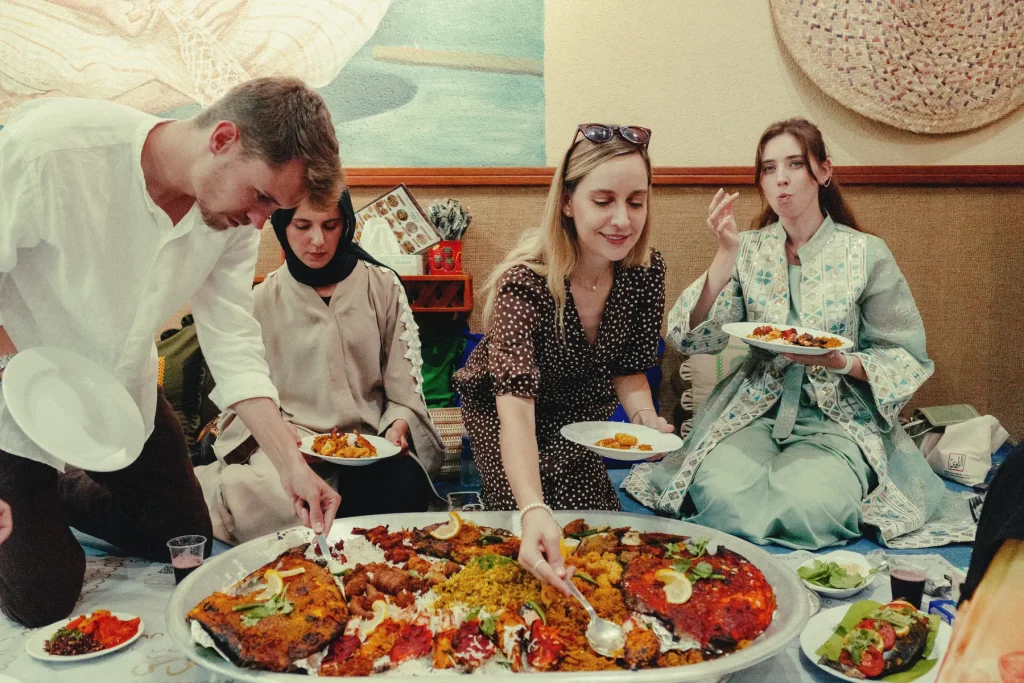
For the most authentic meal of my trip, head to Al Banosh Seafood & Local Restaurant (مطعم البانوش للمأكولات البحرية والشعبية) in Sharjah. You sit on the floor, majlis style, and eat with your hands. Staying in Dubai? There’s another branch in Al Wasl.
What to order: the grilled and fried fish platter, and you must try the shark. It’s an Emirati coastal speciality.
Nomani at The Chedi Al Bait
Nomani is an award-winning Japanese-Korean restaurant inside The Chedi Al Bait, created by chef Reif Othman. The three-course lunch menu is fantastic value and a great way to ease into your trip. Highlights include bibimbap with Chilean sea bass and matcha tiramisu.
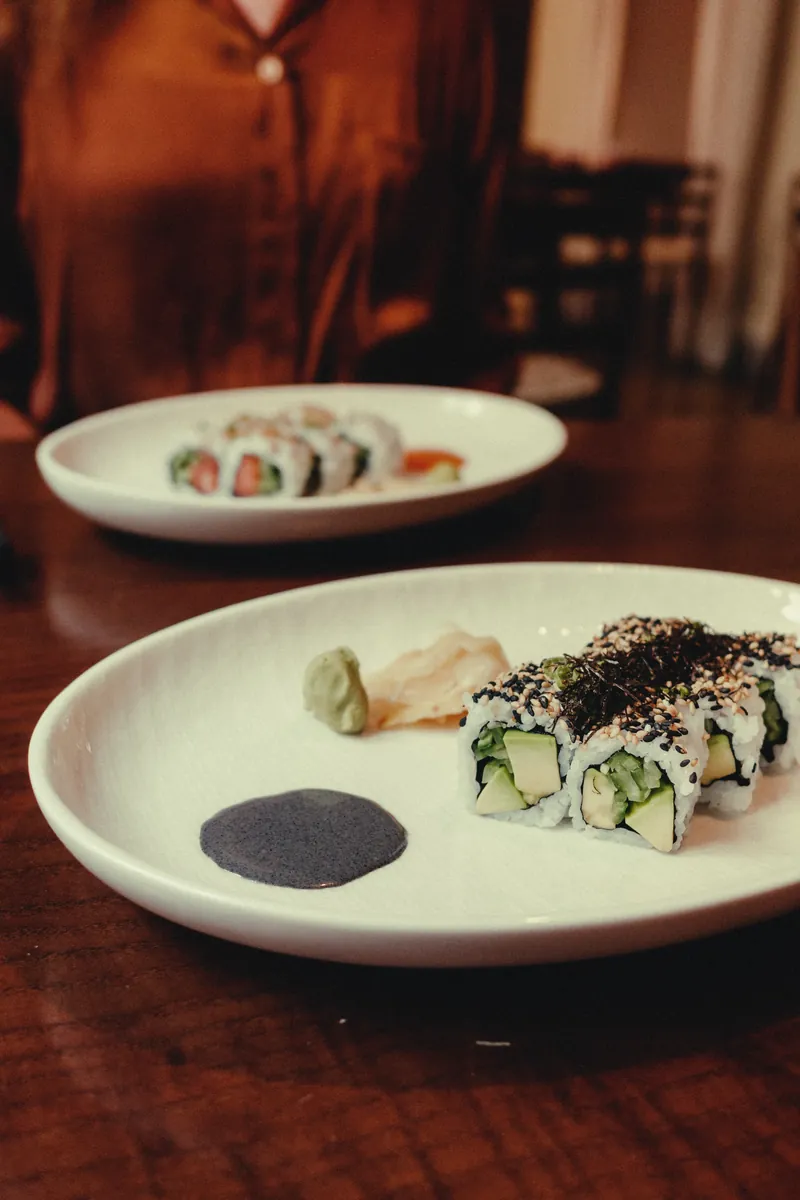
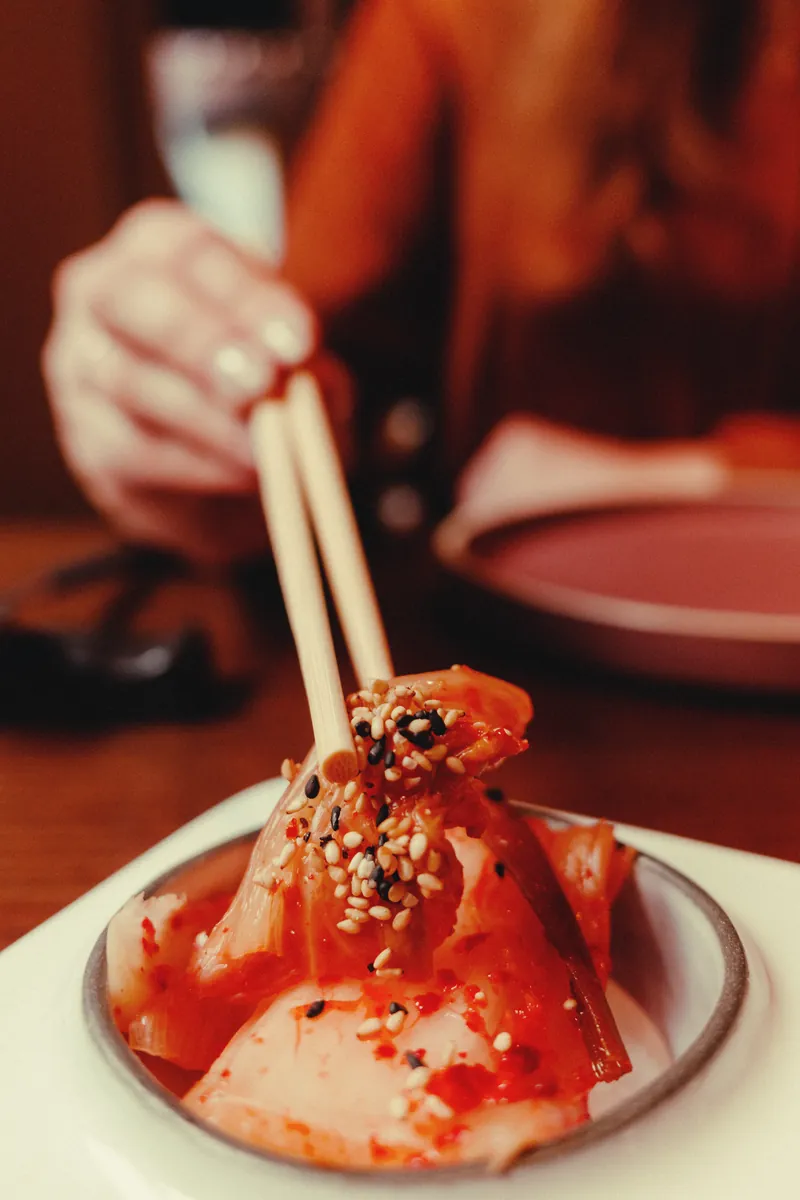
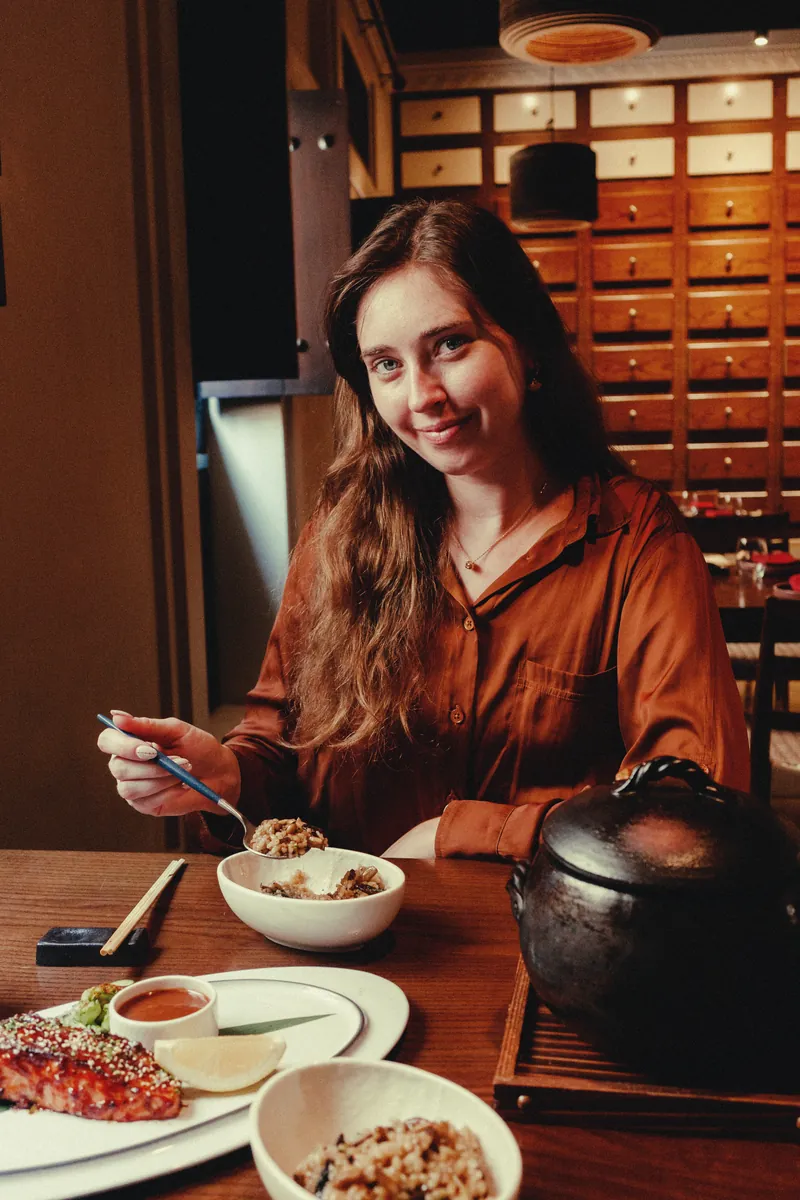
The Restaurant at The Chedi Al Bait
Too tired to explore on your first night? The hotel’s main restaurant serves delicious international dishes in huge portions.
Baitna Café: coffee with a view
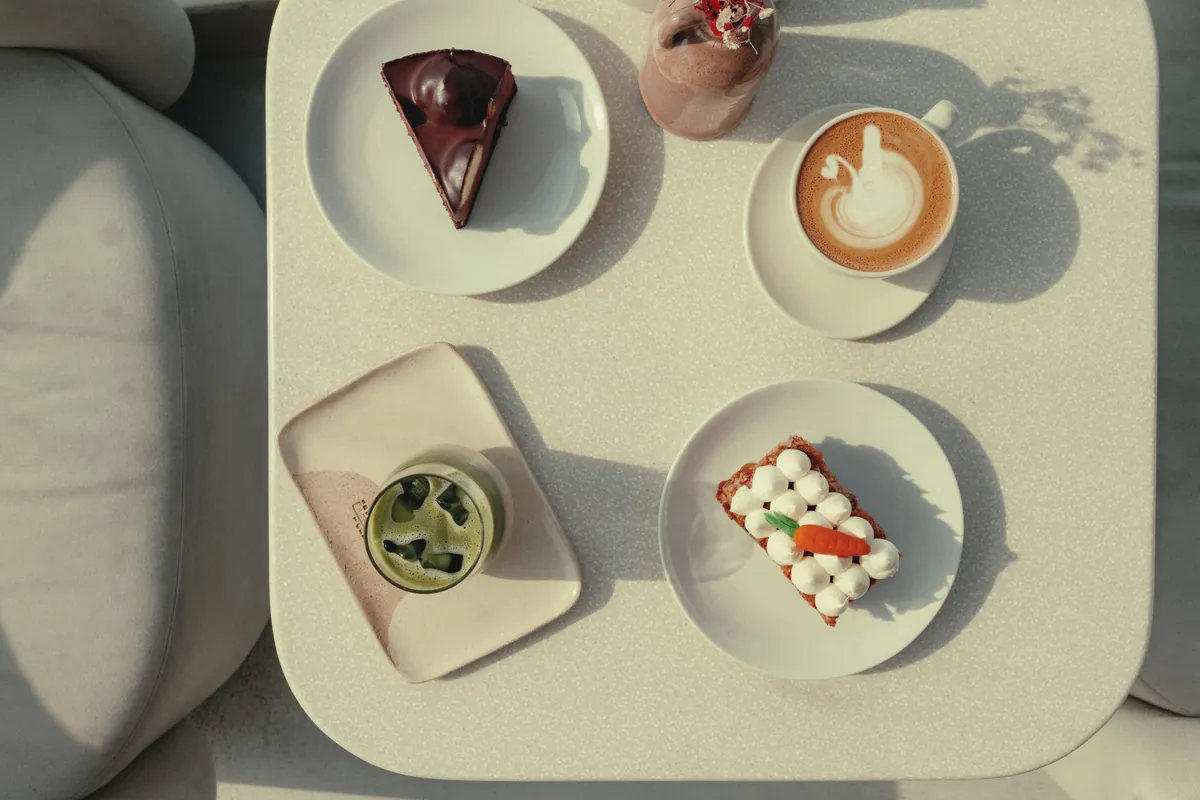
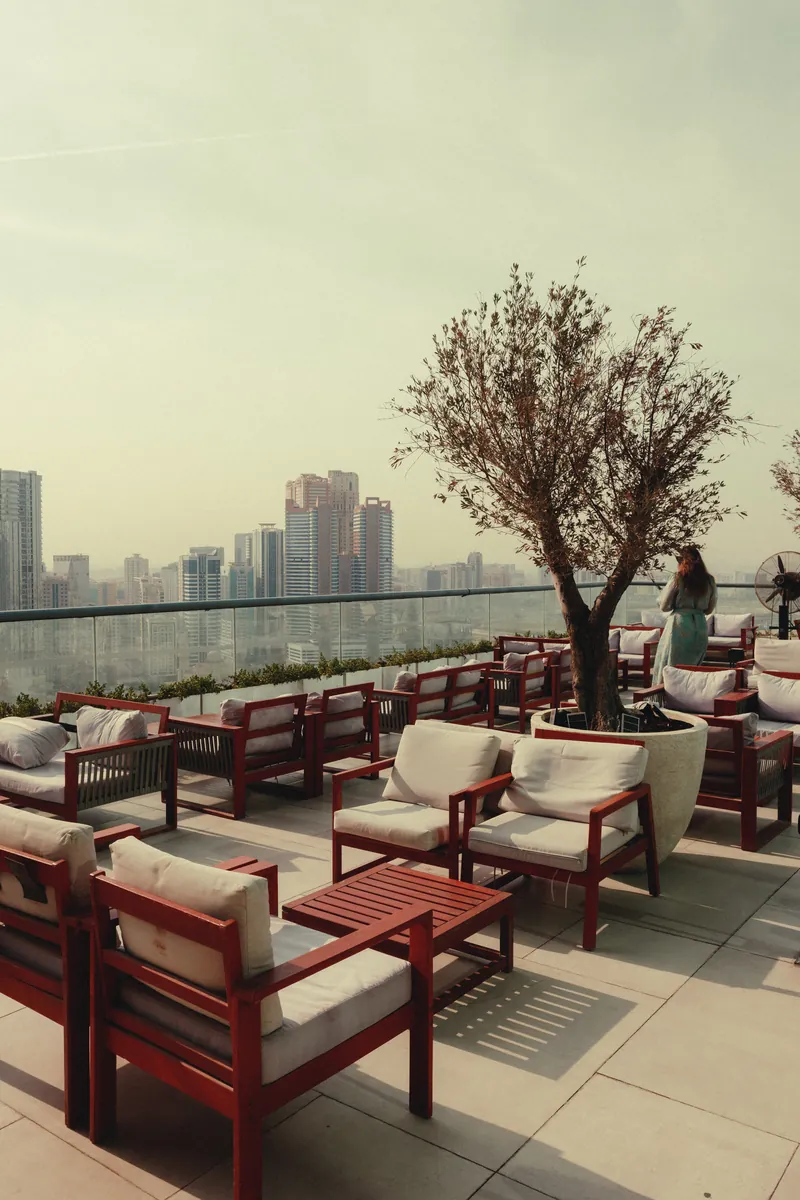
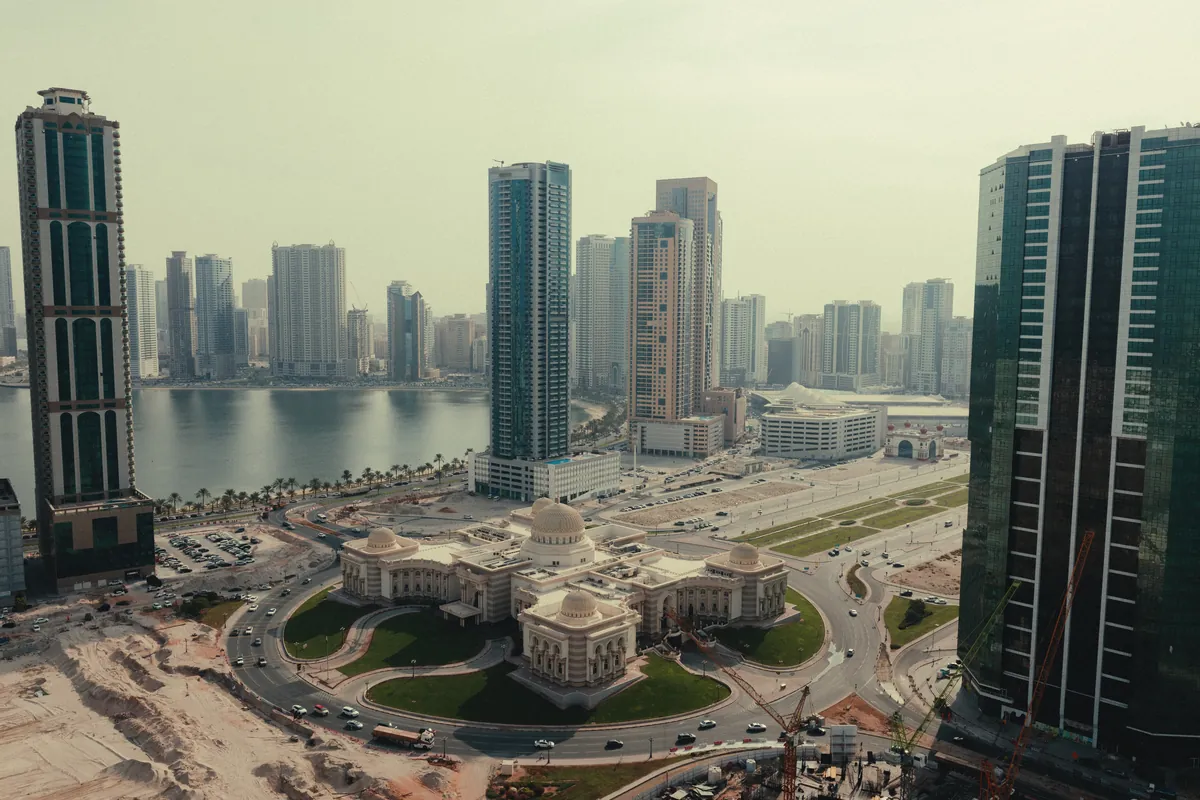
Baitna Café (بيتنا كافيه) sits on the 30th floor of Tabarak Tower in Al Mamzar and bills itself as the highest-floor specialty café in the UAE. The floor-to-ceiling views over the sea are a perfect start to the day. Don’t miss the ham and cheese croissant.
Emirati dishes to try in Sharjah
- Gahwa and dates. Light, cardamom-spiced Arabic coffee, always served with dates. It’s the heart of Emirati hospitality.
- Machboos. Spiced rice with chicken, lamb or fish, the UAE’s national dish.
- Chicken mandi. Slow-cooked, smoky spiced chicken on fragrant rice. It’s Yemeni in origin but a staple all over the UAE.
- Harees. Slow-cooked wheat and meat, especially popular during Ramadan.
- Jasheed. A traditional coastal dish of shredded baby shark cooked with onions and spices. A must for adventurous eaters.
- Grilled hammour. The Gulf’s favourite local fish (a type of grouper), simply grilled with spices. Order it at any seafood spot.
- Fattoush. A crunchy Levantine salad with toasted flatbread, sumac and pomegranate molasses. Not Emirati in origin, but you’ll find it on almost every table.
- Luqaimat. Crispy fried dough balls drizzled with date syrup. Dangerously addictive.
- Balaleet. Sweet vermicelli with saffron and cardamom, topped with an omelette, usually eaten for breakfast.
- Chebab. Emirati pancakes flavoured with saffron and cardamom.
- Halwa. A sticky sweet made with saffron, rosewater and nuts.
- Karak chai. Strong, sweet, spiced milk tea, sold everywhere.
Where to Stay in Sharjah
Because Sharjah is so spread out, I strongly recommend splitting your stay across two or three hotels. Here are the places I stayed or visited:
City: The Chedi Al Bait (Heart of Sharjah)
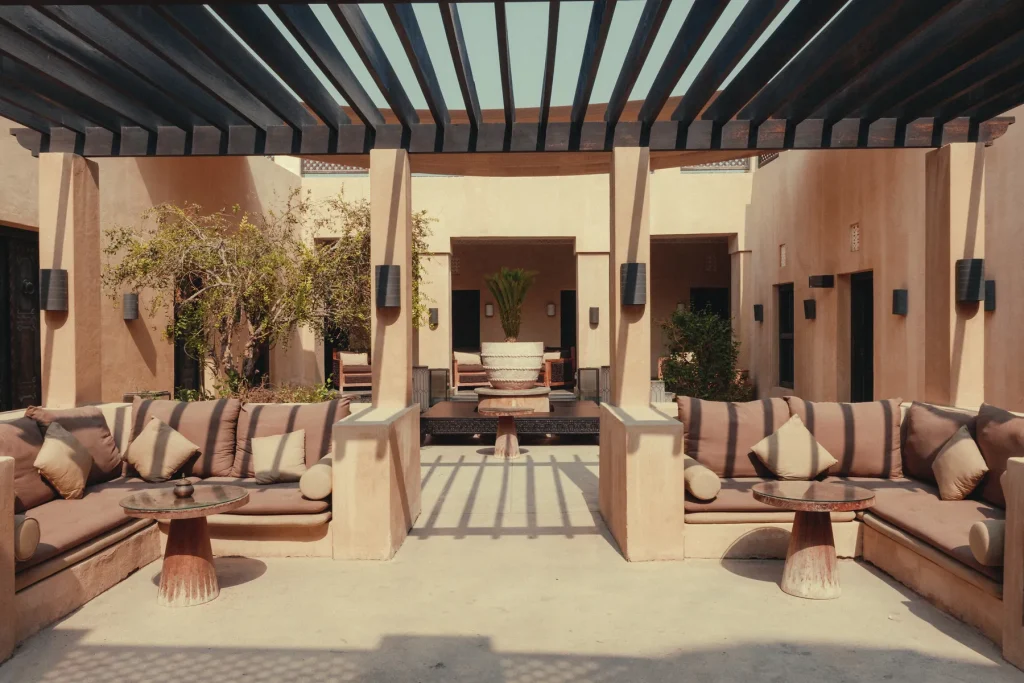
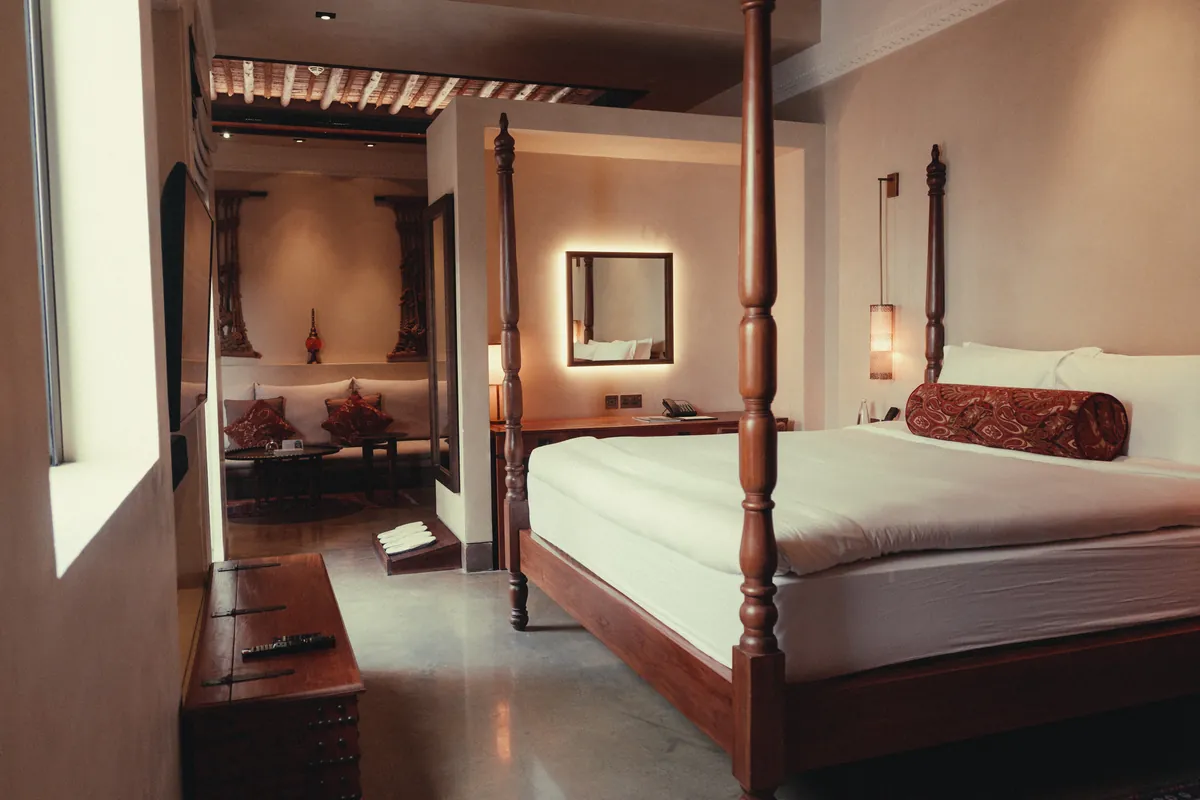
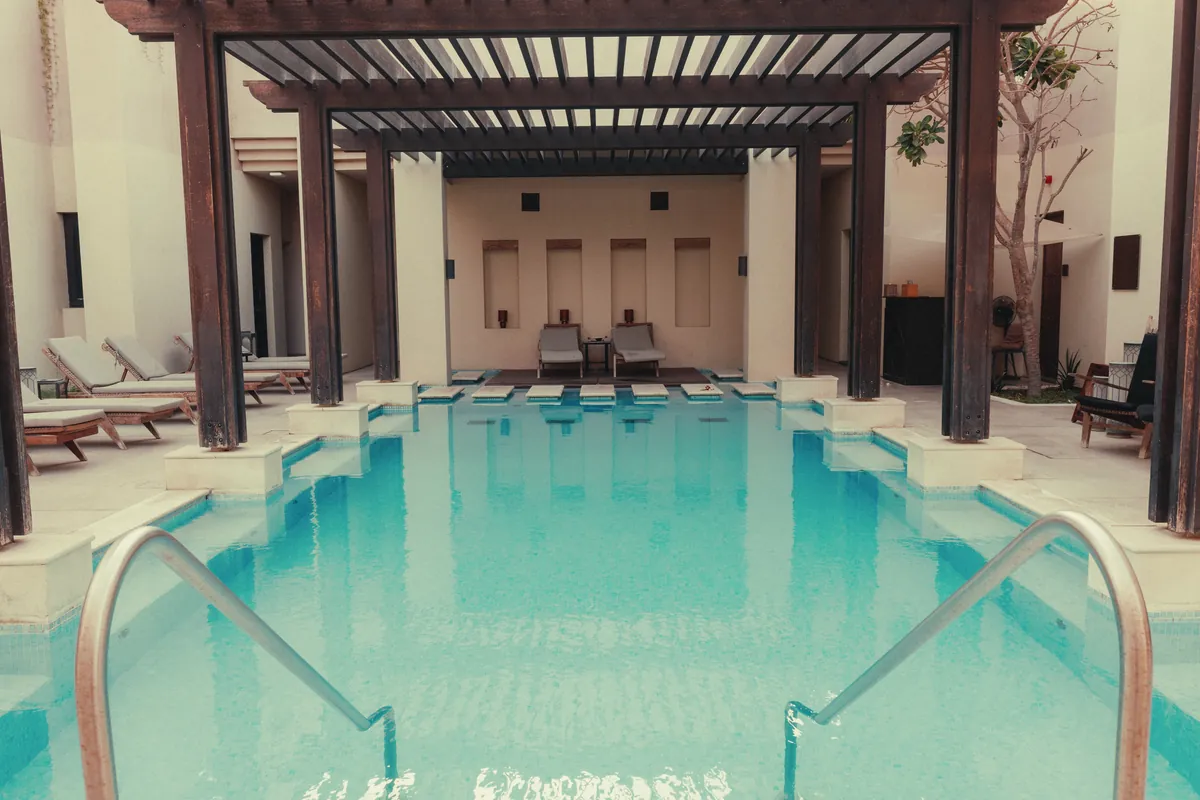
The Chedi Al Bait is a 5-star heritage hotel created from restored historic houses in the old town, steps from the souks. Make the most of the facilities on your first day: relax by the pool and book the spa after your long flight.
Ladies: the women’s spa area has a jacuzzi and a cold plunge. Make great use of them!
Desert: Moon Retreat (Mleiha)
If you want to continue the desert experience after your Mleiha tour, book an overnight stay at Moon Retreat. You sleep in glamping domes and tents, many with their own private pool and barbecue area, right next to the Mleiha Archaeological Centre.
Check prices and availability for Moon Retreat
Desert, more luxurious: Al Badayer Retreat

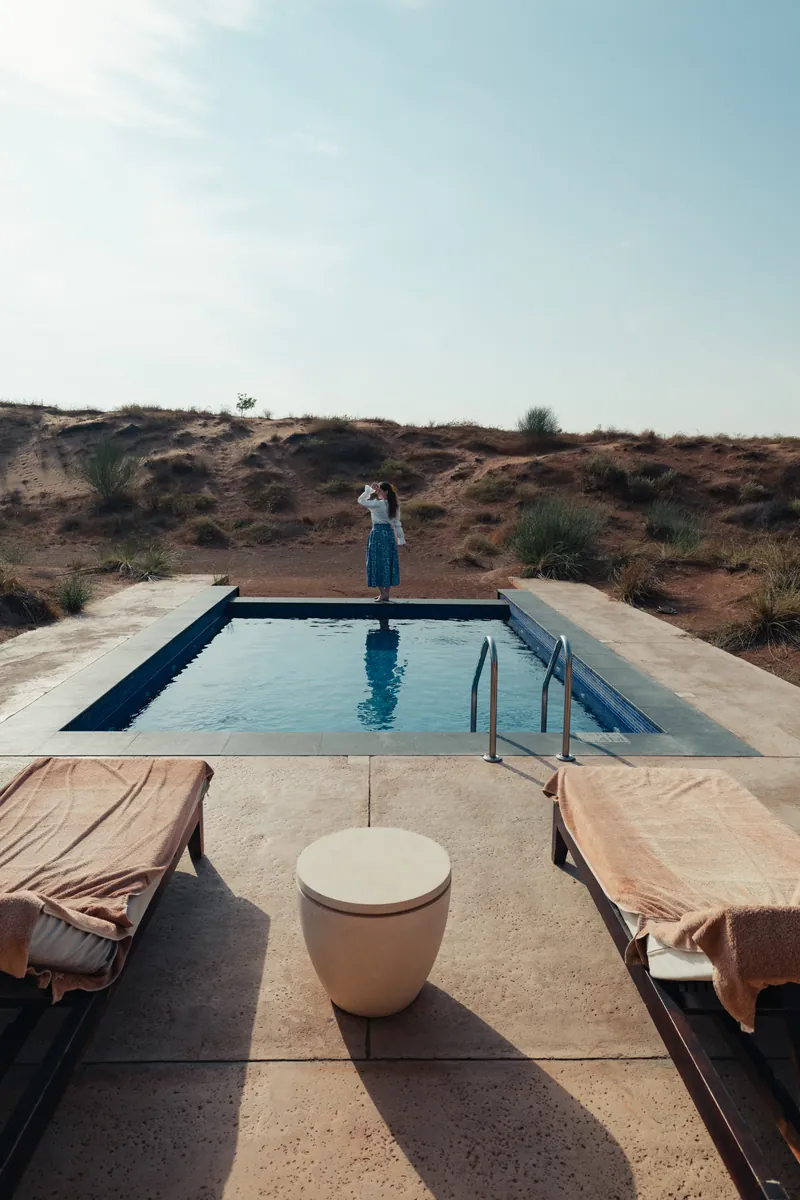
For a more luxurious desert stay, Al Badayer Retreat sits among the red dunes of the Al Badayer desert. I recommend booking one of the one- or two-bedroom tents with a private pool.
Mountains: Najd Al Meqsar (Khorfakkan)
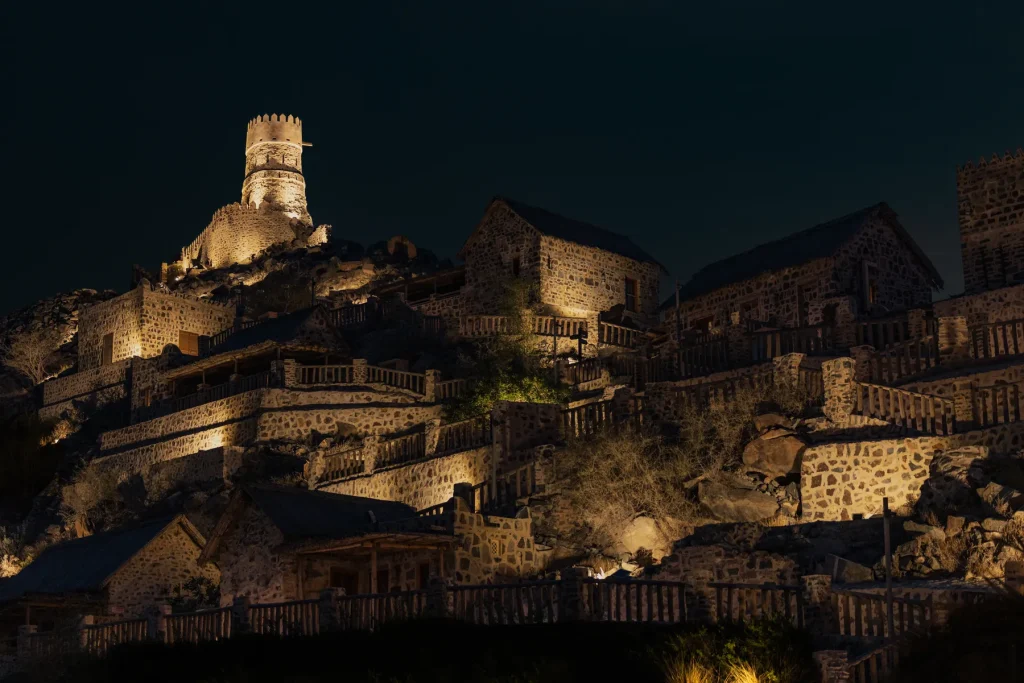
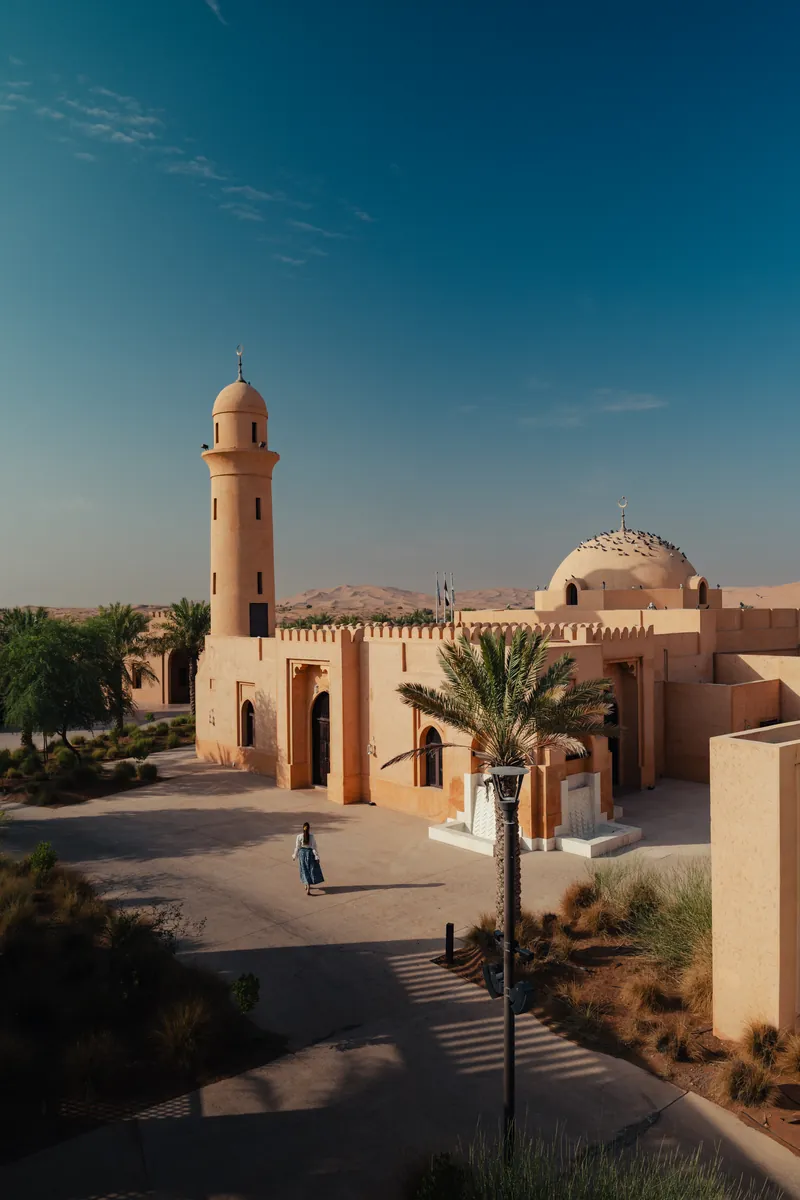
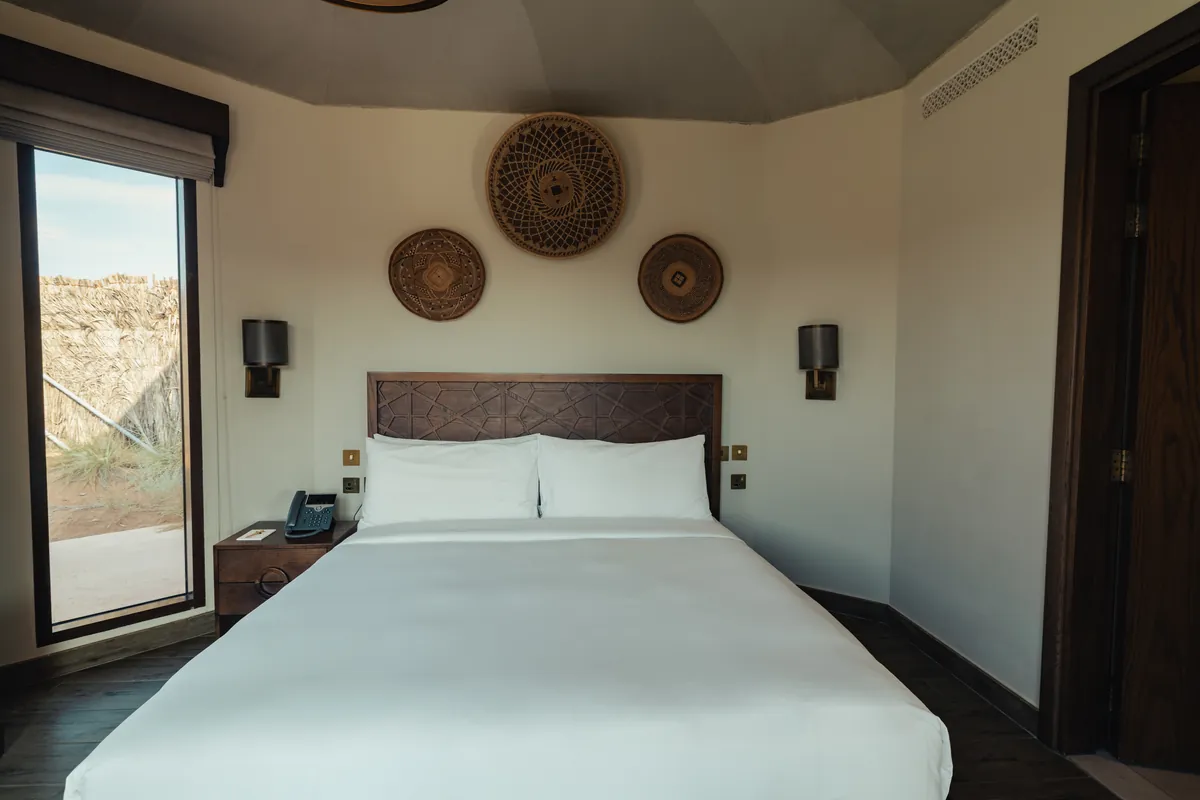
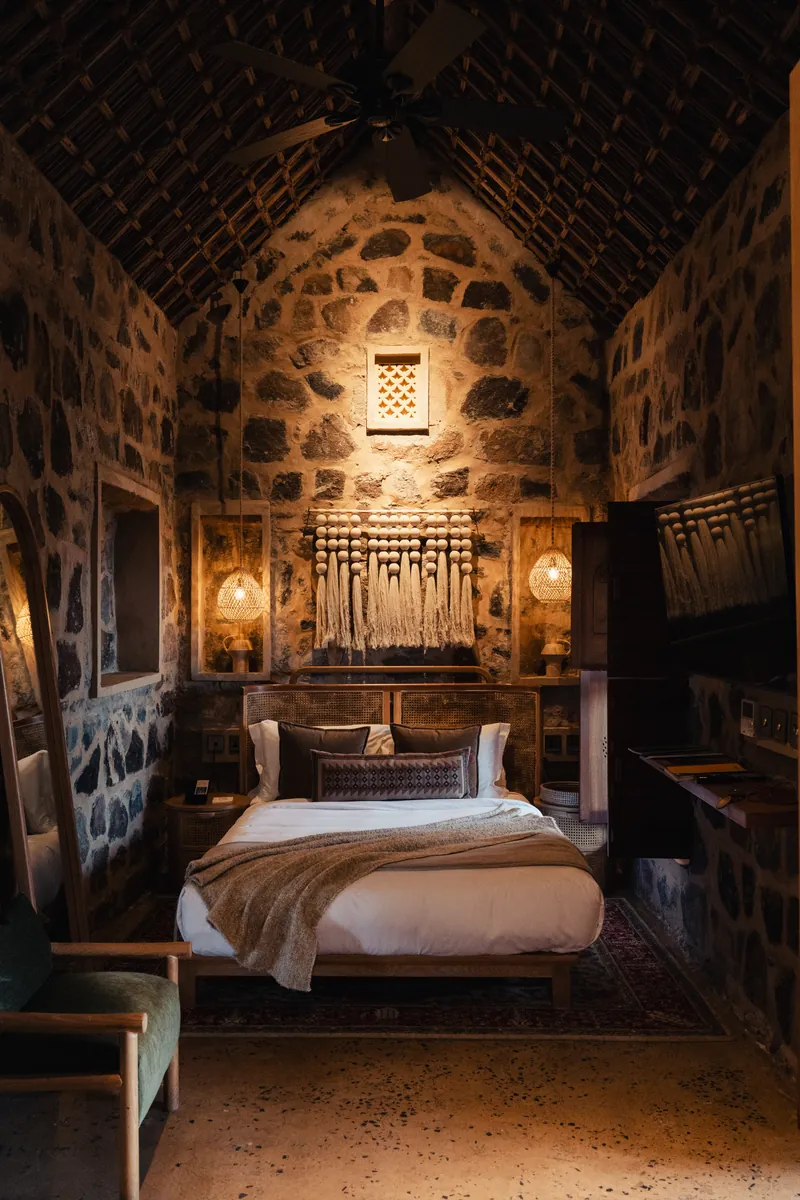
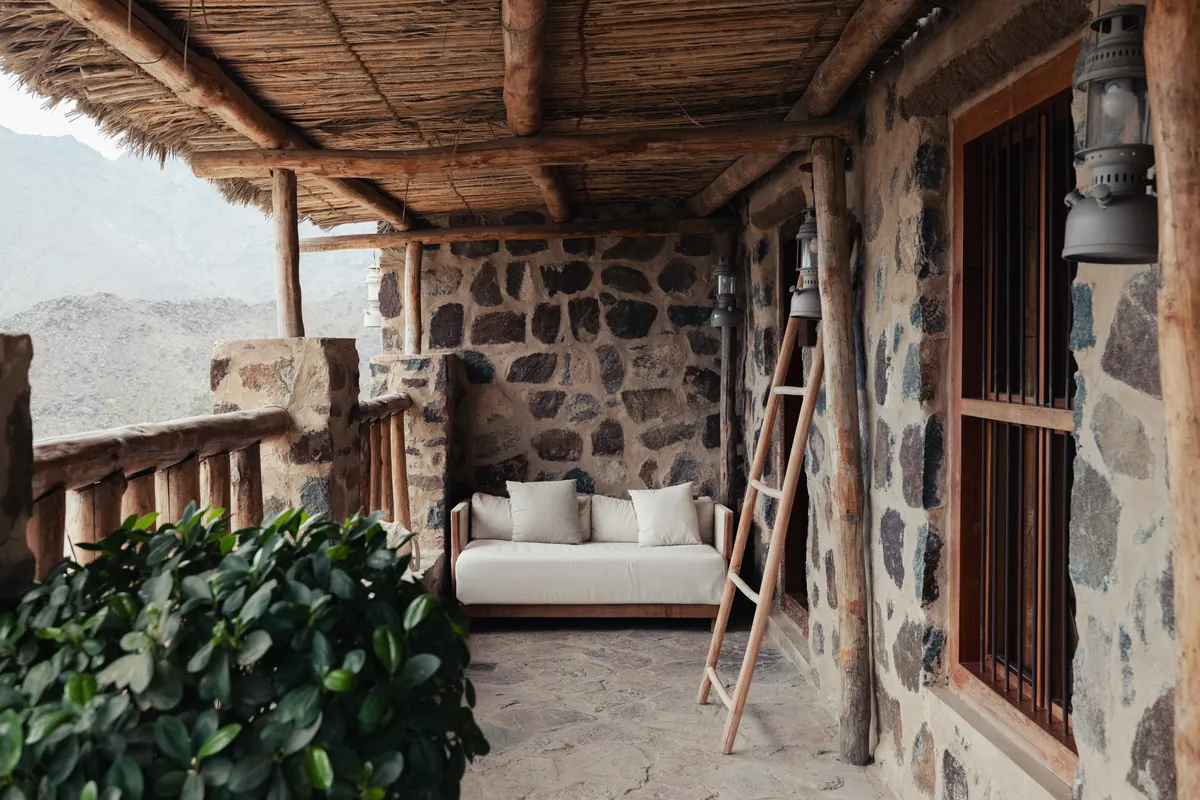
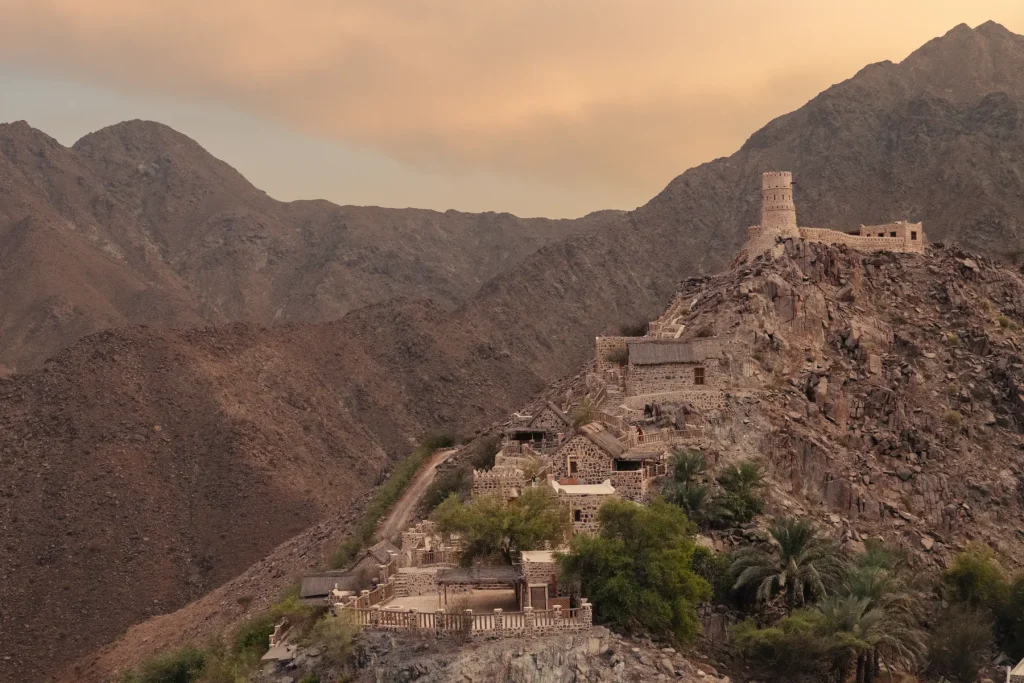
This was one of the most unique hotels I’ve ever seen. Najd Al Meqsar is a restored mountain village in the Wadi Shie archaeological area, 10 minutes from Khorfakkan. The original stone houses, some over a century old, have been turned into just seven rooms, each with mountain views and a private outdoor seating area. It’s adults only.
With only seven rooms, booking ahead is essential. I recommend staying at least one night.

Coast: Kingfisher Retreat (Kalba)

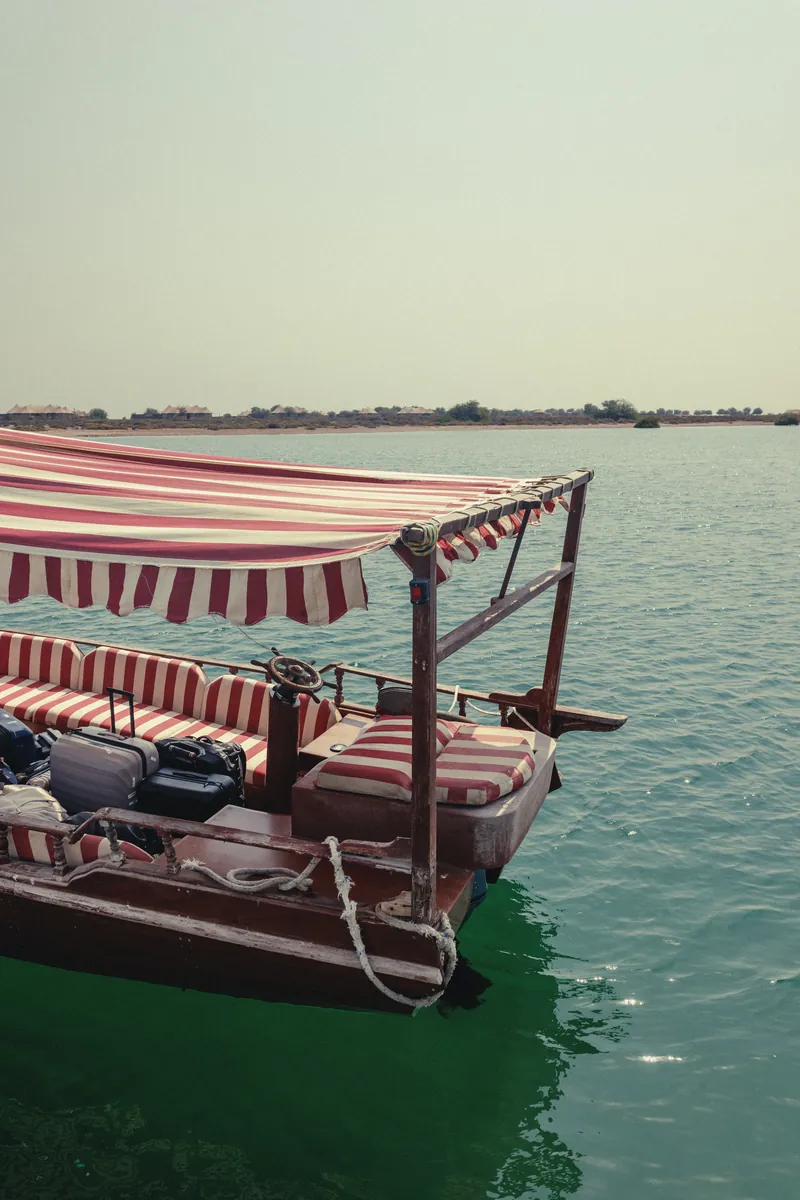
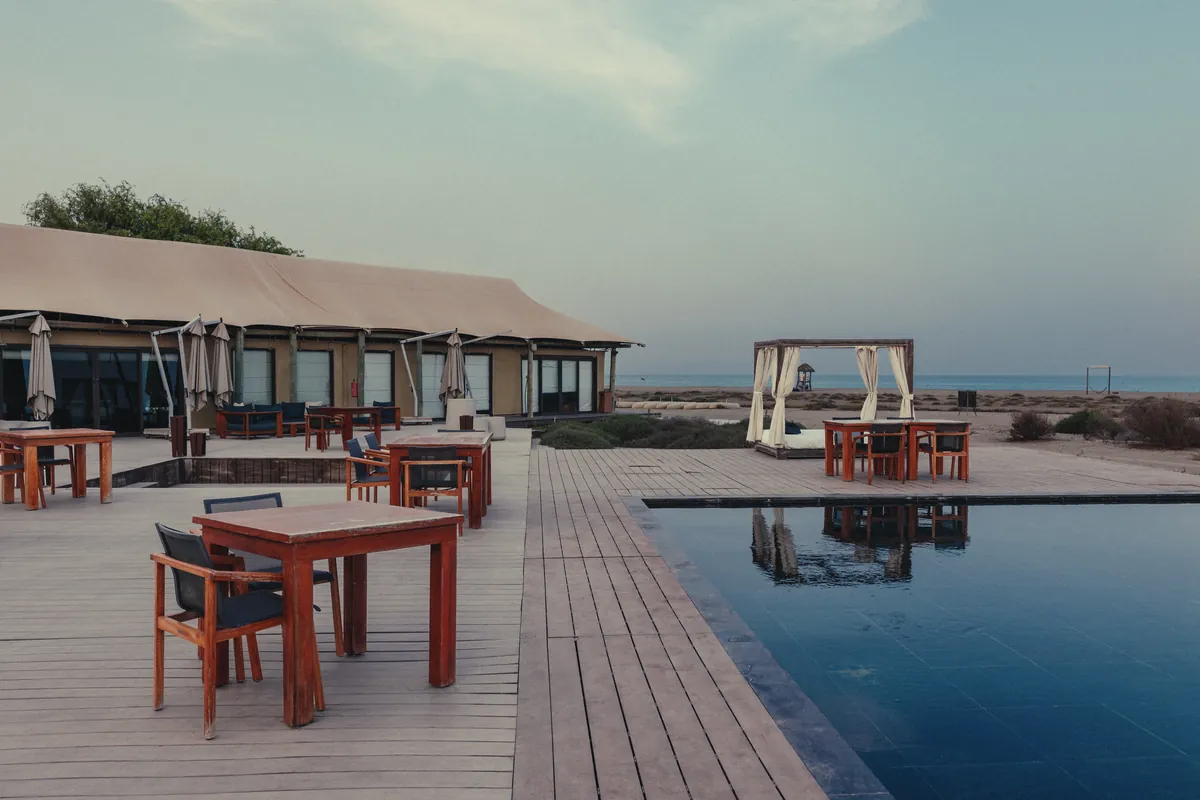
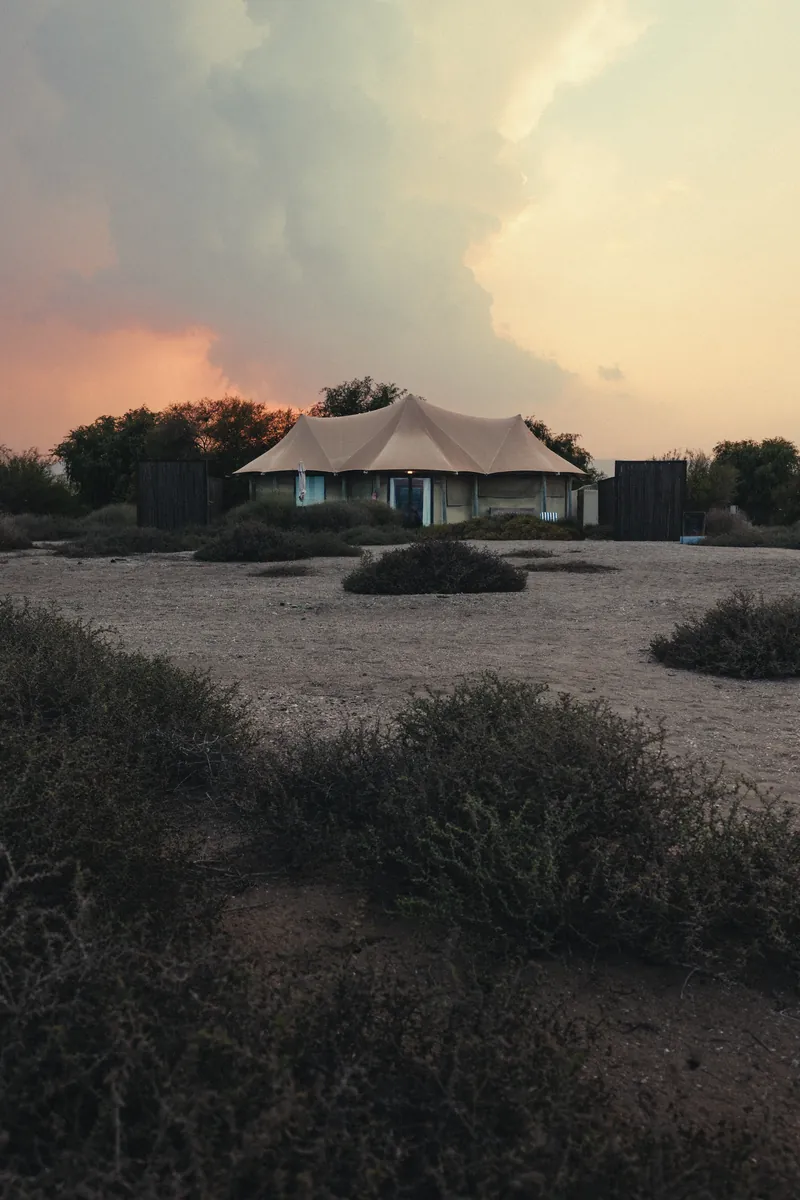
This is the place to end your trip. The Kingfisher Retreat sits inside the Kalba mangroves on the Gulf of Oman, and you reach it by traditional boat, which makes arriving feel truly special.
The luxury tents have private pools and sea views. You can swim in the Gulf of Oman, then come back to the privacy of your pool, feeling like you’re outdoors but with all the comfort of a luxury room. You can also ask for a floating breakfast to be served in your private pool, and at night you’ll see gazelles roaming free around the tents.
Best Time to Visit Sharjah
The best time to visit Sharjah is from November to March, when daytime temperatures are pleasant (roughly 20–30°C) and you can comfortably explore the souks, hike, go dune bashing and enjoy al fresco dining.
- November–March: peak season with the best weather. Perfect for desert dinners, terraces and hiking. Book hotels like Najd Al Meqsar early.
- October and April: shoulder months. It’s still warm (often 30–35°C), so plan outdoor activities for early morning and late afternoon.
- May–September: very hot and humid, often over 40°C. Doable if you stay indoors in the middle of the day, and hotel prices drop, but outdoor activities need very early starts.
- Ramadan: the dates move each year (in 2027 it falls around February–March). It’s a beautiful time to experience local culture, but eating and drinking in public during daylight should be avoided, and opening hours change.
What to Pack for Sharjah
- Modest, breathable clothing. Loose linen trousers, maxi skirts and dresses, and tops that cover your shoulders. Sharjah has a public decency code (see below).
- A lightweight scarf or shawl. For mosque visits, chilly air-conditioning and sun protection.
- Swimwear, but only for the hotel pool or beach. Cover up when walking to and from the pool.
- Comfortable walking shoes for the souks, and trainers or hiking shoes for the mountains.
- A light jacket for desert evenings in winter, which get surprisingly cool.
- High-SPF sunscreen, sunglasses and a hat.
- A reusable water bottle.
- An eSIM so you have data for maps when driving. Get a Holafly eSIM with 5% off using code HELENA5.
Things to Know Before Visiting Sharjah
- Sharjah is a dry emirate. Alcohol isn’t sold or served anywhere, including hotels. If you want a drink, Dubai is a short drive away. Honestly, I didn’t miss it.
- Respect the decency code. Clothing that is very short, see-through or shows the stomach or back isn’t allowed in public places. Swimwear is only for beaches and pools.
- Public displays of affection are frowned upon. Keep it to holding hands at most.
- Visas: UK passport holders currently get a free visa on arrival for 30 days. Always double-check the latest rules on the UK government’s FCDO travel advice page before you fly.
- Sharjah has a long weekend. Government offices work a four-day week and close Friday to Sunday, so some public venues have shorter hours on Fridays. Expect quieter mornings and changed opening times around Friday prayers.
- Ask before photographing people, especially women, and don’t photograph government buildings.
- Use your right hand for eating and for giving or receiving things.
- Hospitality is everything. If you’re offered coffee and dates, accept. Gently shake the small cup when you’ve had enough.
- Ride-hailing is limited outside the city, so plan transport in advance (see “How to get around”).
- Some venues open on limited days. Places like the Dr Sultan Al Qasimi Centre only open Monday to Thursday, so plan your cultural days around them.
FAQ
Is Sharjah worth visiting?
Yes. Sharjah is worth visiting if you want an authentic look at Emirati culture alongside nature and adventure. In one emirate you can explore 200-year-old souks, a UNESCO-listed desert landscape, mountain villages and the Gulf of Oman coast, with fewer crowds than Dubai.
How many days do you need in Sharjah?
I recommend 7 days: three in Sharjah city, two in the Mleiha desert, and two on the east coast (Khorfakkan and Kalba). If you only have a day, focus on the Heart of Sharjah souks, Al Noor Island and dinner at Murmur or Bait Elowal.
What is the difference between Sharjah and Dubai?
Sharjah is more traditional and conservative than Dubai. It has no alcohol, a stricter dress code and a big focus on heritage, museums and nature. Dubai is known for skyscrapers, nightlife and luxury shopping. The two cities border each other and are about 30 minutes apart by car without traffic.
Which airport is closest to Sharjah?
Sharjah International Airport (SHJ) is the closest, about 10–13 km from the city centre. Dubai International Airport (DXB) is also very close, roughly 12–17 km from Sharjah city, and has more direct flights from the UK.
Can tourists drink alcohol in Sharjah?
No. Sharjah is the only emirate in the UAE where alcohol is completely banned, including in hotels and restaurants. Visitors who want a drink usually go to neighbouring Dubai.
Do I need a car in Sharjah?
A car or private driver is strongly recommended. Uber and Careem work well in Sharjah city, but they are hard to find on the east coast near Kalba, Khorfakkan and the Oman border, where many of the best attractions and retreats are.
What should women wear in Sharjah?
Women should wear clothing that covers the shoulders and knees and isn’t tight or see-through. Loose maxi dresses, linen trousers and a light scarf work perfectly. Swimwear is fine at hotel pools and beaches, and a headscarf is needed to enter the Sharjah Mosque.
Is Sharjah safe for tourists?
Yes. The UAE is generally considered one of the safest countries in the world for travellers, including solo female travellers. I felt completely safe throughout my trip. As anywhere, check the latest FCDO travel advice before you go.
What is Sharjah famous for?
Sharjah is famous for its culture and heritage. It has dozens of museums, the restored Heart of Sharjah old town, the Blue Souk, the Rain Room, the Sharjah Safari (the largest safari park outside Africa) and the Faya Palaeolandscape UNESCO World Heritage Site in Mleiha.
Final Thoughts
Sharjah completely surprised me. I expected a quieter version of Dubai. What I found was the soul of the UAE: coffee and dates in a 200-year-old souk, butterflies landing on my hands, the most fun I’ve ever had on a sand dune, and falling asleep to the sound of the Gulf of Oman with gazelles wandering outside my tent.
Hire a car, give yourself a full week, and split your stay between the city, the desert and the coast. Sharjah will reward you.
Have you been to Sharjah, or is it on your list? Tell me in the comments. And for more travel inspiration, come and say hi on Instagram and TikTok. Let’s collect moments, not things! ✨
Ready to book your Sharjah trip?
- 🏨 Hotels: Find hotels in Sharjah on Booking.com
- 🐪 Mleiha desert tour & activities: Browse Sharjah activities on GetYourGuide
- 📱 eSIM: Get a Holafly eSIM with 5% off using code HELENA5
- ✈️ Flights: Compare flights on Skyscanner
- 🚗 Car hire: Compare car hire on Booking.com
Disclosure: I visited Sharjah as a guest of the Sharjah Tourism Board. As always, every opinion here is my own, and I’ve left out anything I wouldn’t recommend to a friend. This post also contains affiliate links, which means I may earn a small commission if you book through them, at no extra cost to you.


